

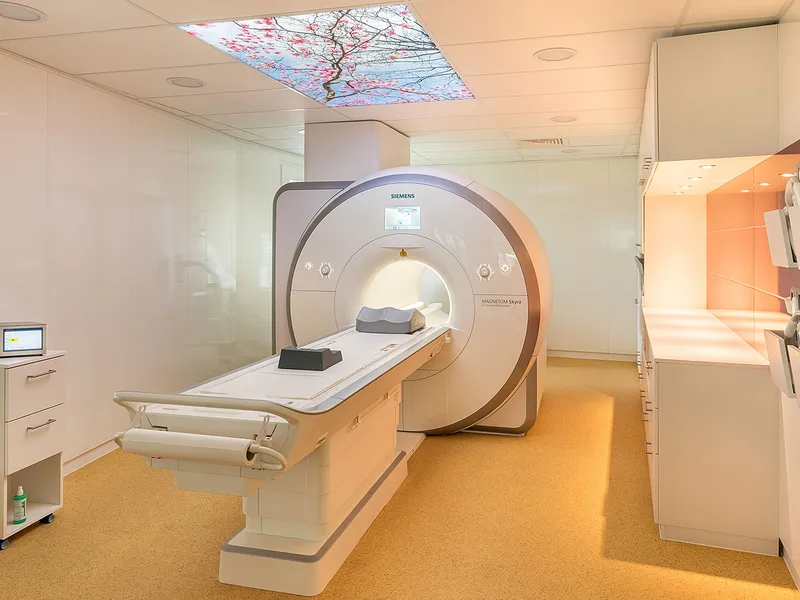
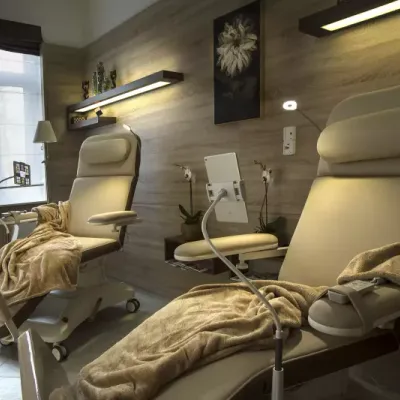
Medical composite housings are used on diagnostic and treatment devices where hygiene, appearance and dimensional precision are essential. Carbon Composites has supported projects for equipment manufacturers that need clean surfaces, stable geometry and repeatable production quality.
Why composites work well in medical environments
Healthcare equipment often combines complex design surfaces with demanding cleaning requirements. Composite materials make it possible to produce smooth, closed-surface housings that are easy to clean, visually refined and resistant to regular service conditions.
Another major advantage is design freedom. Diagnostic equipment and treatment chairs frequently require integrated shapes, hidden fixings and engineered substructures that would be difficult or inefficient to produce from sheet metal alone.
Typical applications
Our medical-sector work includes housings for diagnostic equipment, treatment-chair components and instrument enclosures. In these products, precision fit matters because visible gaps, poor alignment or unstable surfaces directly affect both usability and product perception.
The manufacturing route can combine RTM, CNC trimming and high-quality finishing, depending on structural and cosmetic requirements. When needed, composite structures can also integrate inserts and support features directly into the part design.
Project support and documentation
Medical projects usually begin with a design or engineering review focused on tolerances, assembly interfaces, finish requirements and expected production quantities. From prototype support to serial manufacturing, we work with documented processes that help maintain repeatability and traceability for professional equipment programs.