

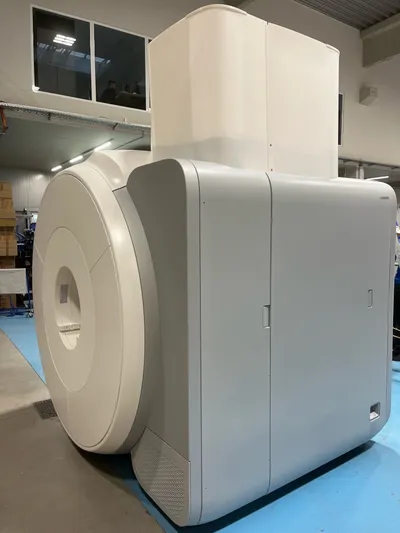
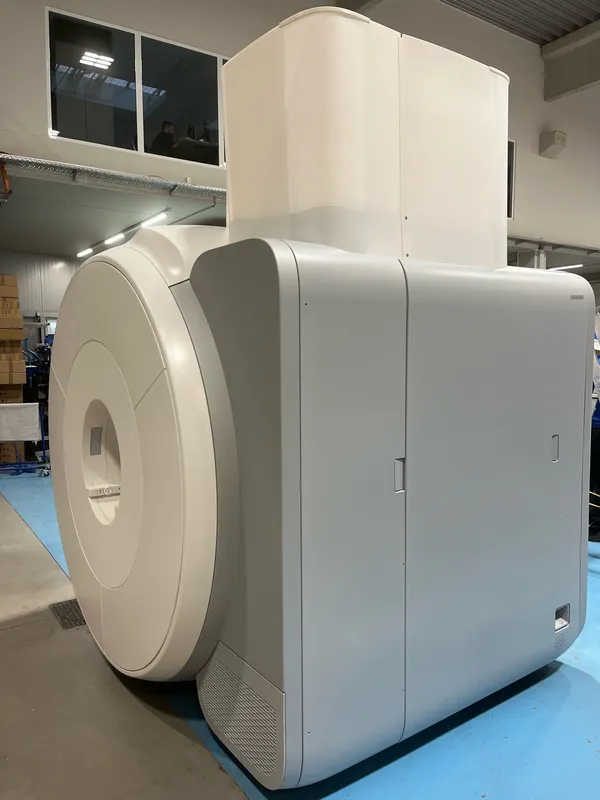
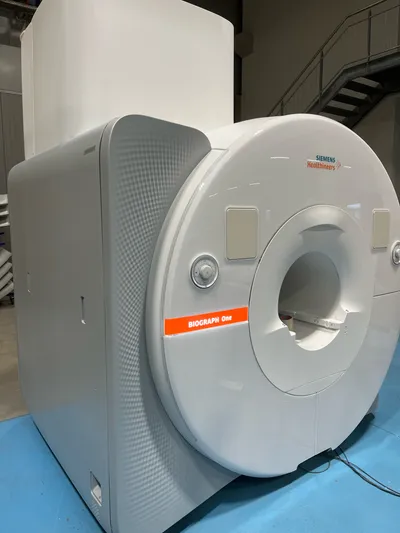
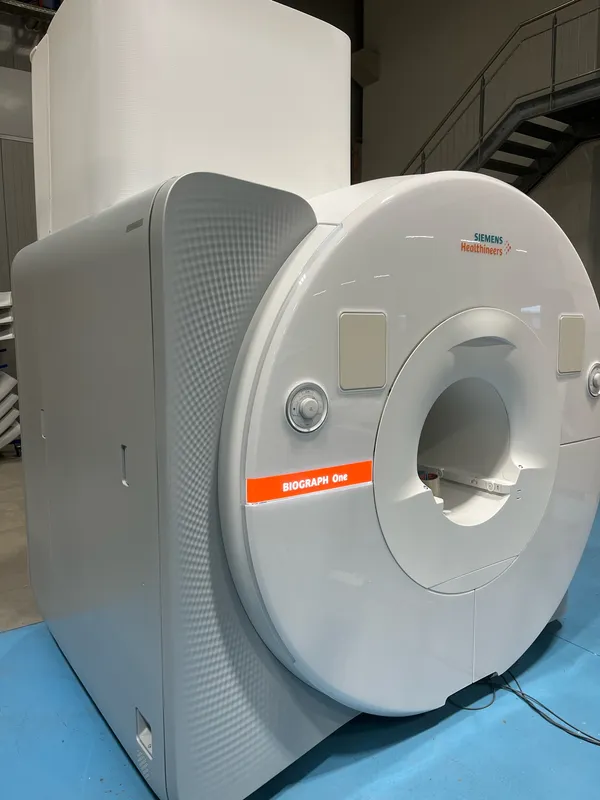
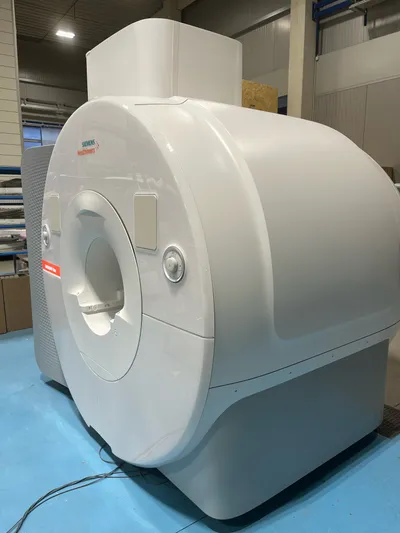
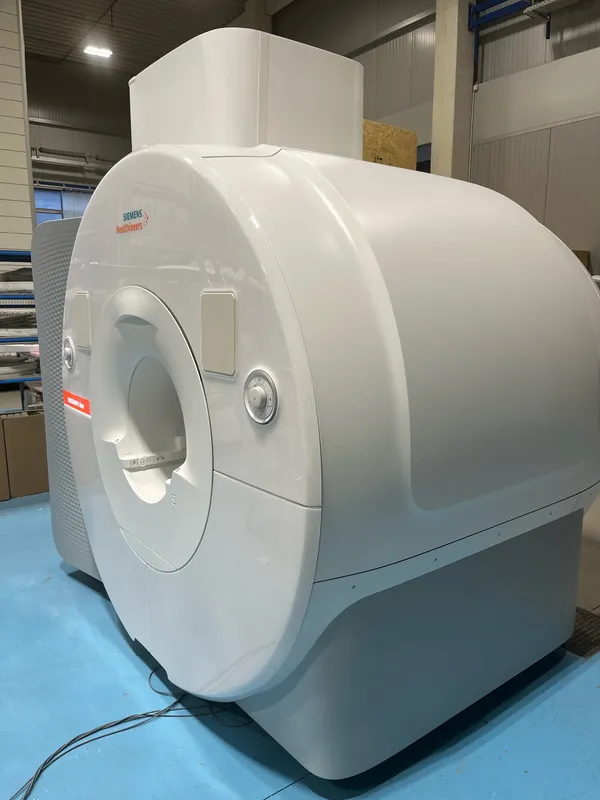
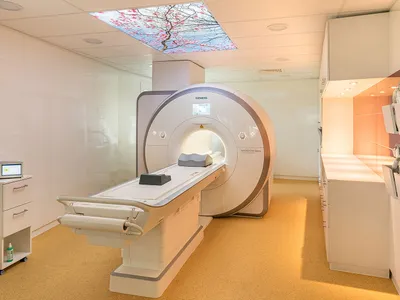
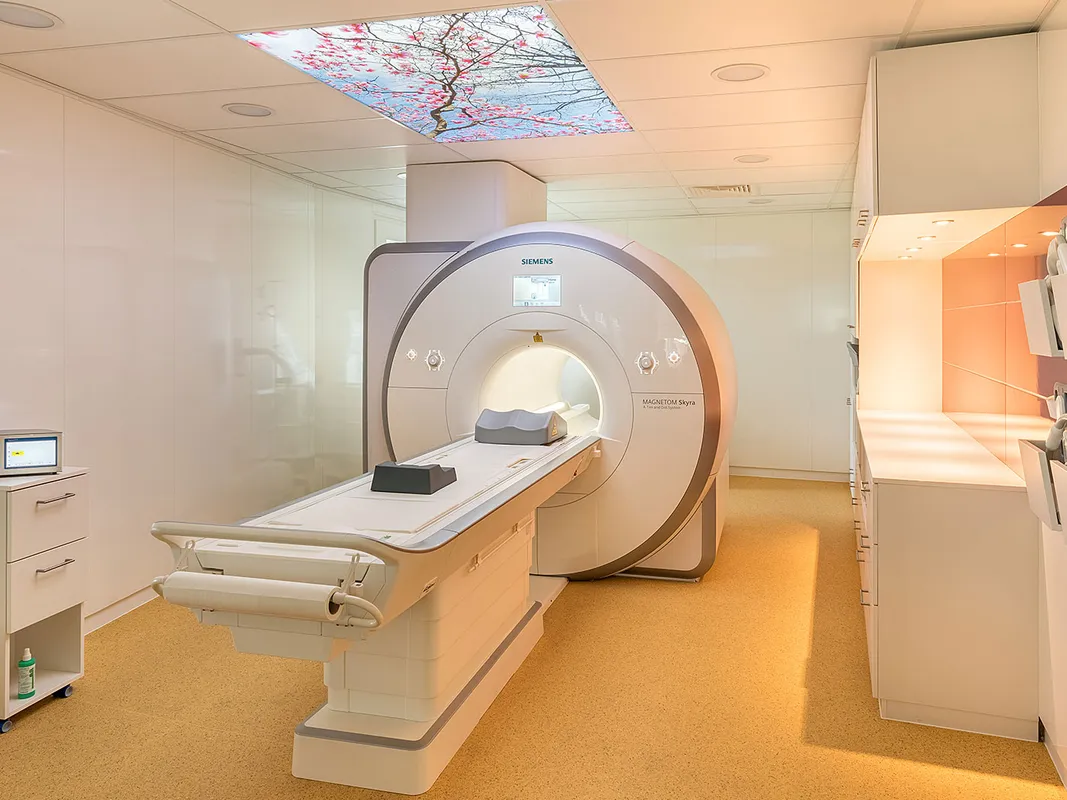
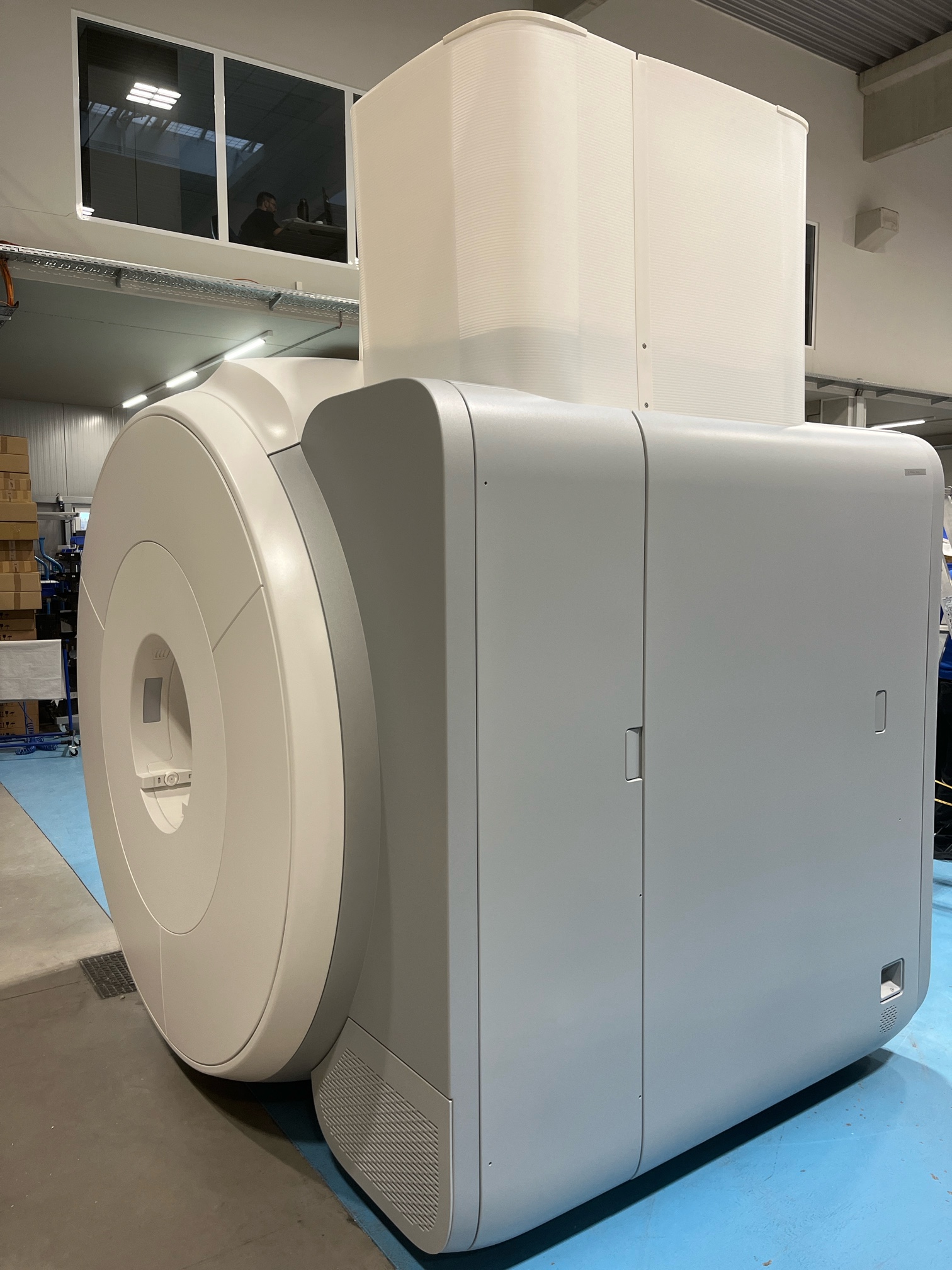
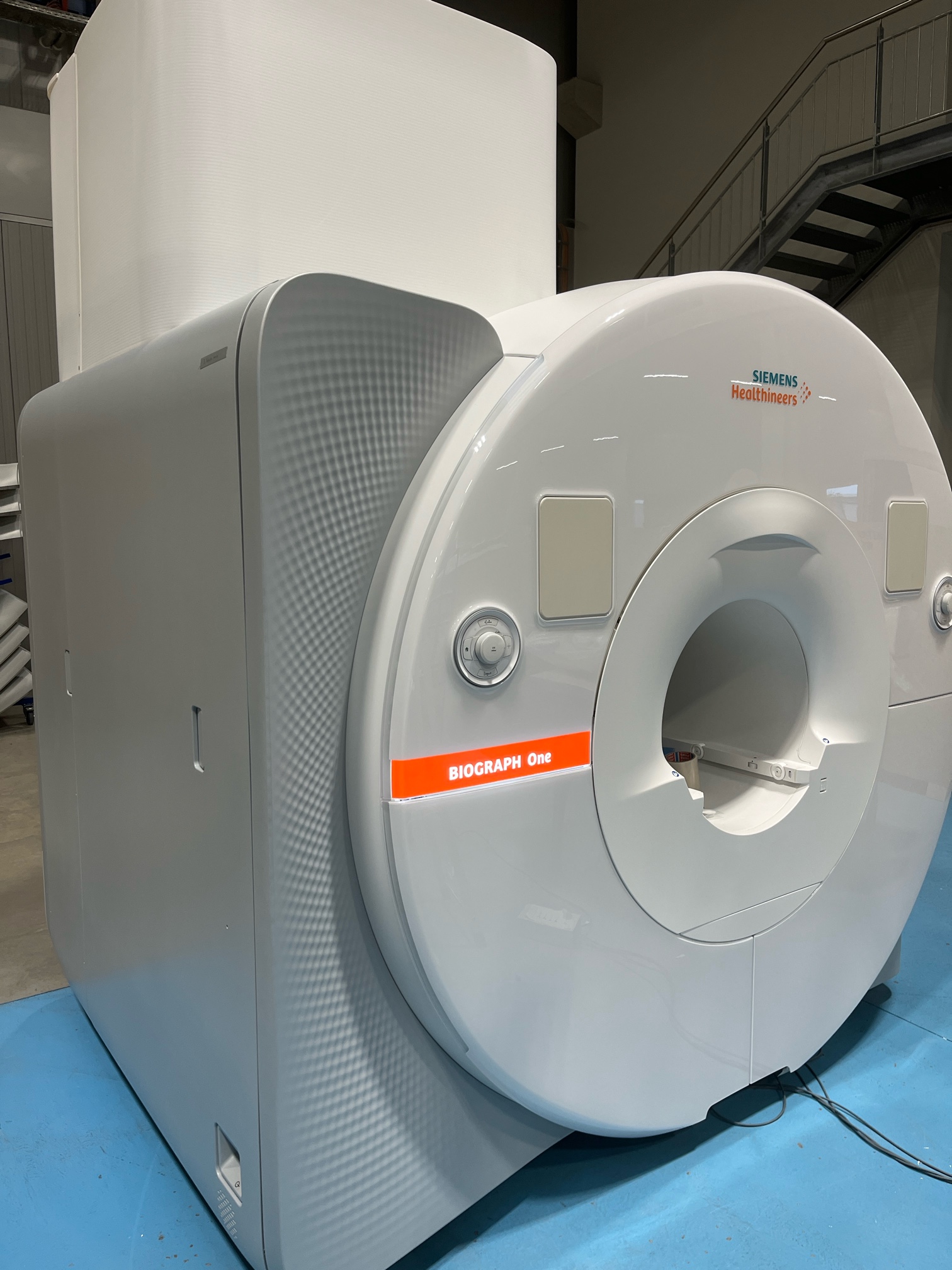
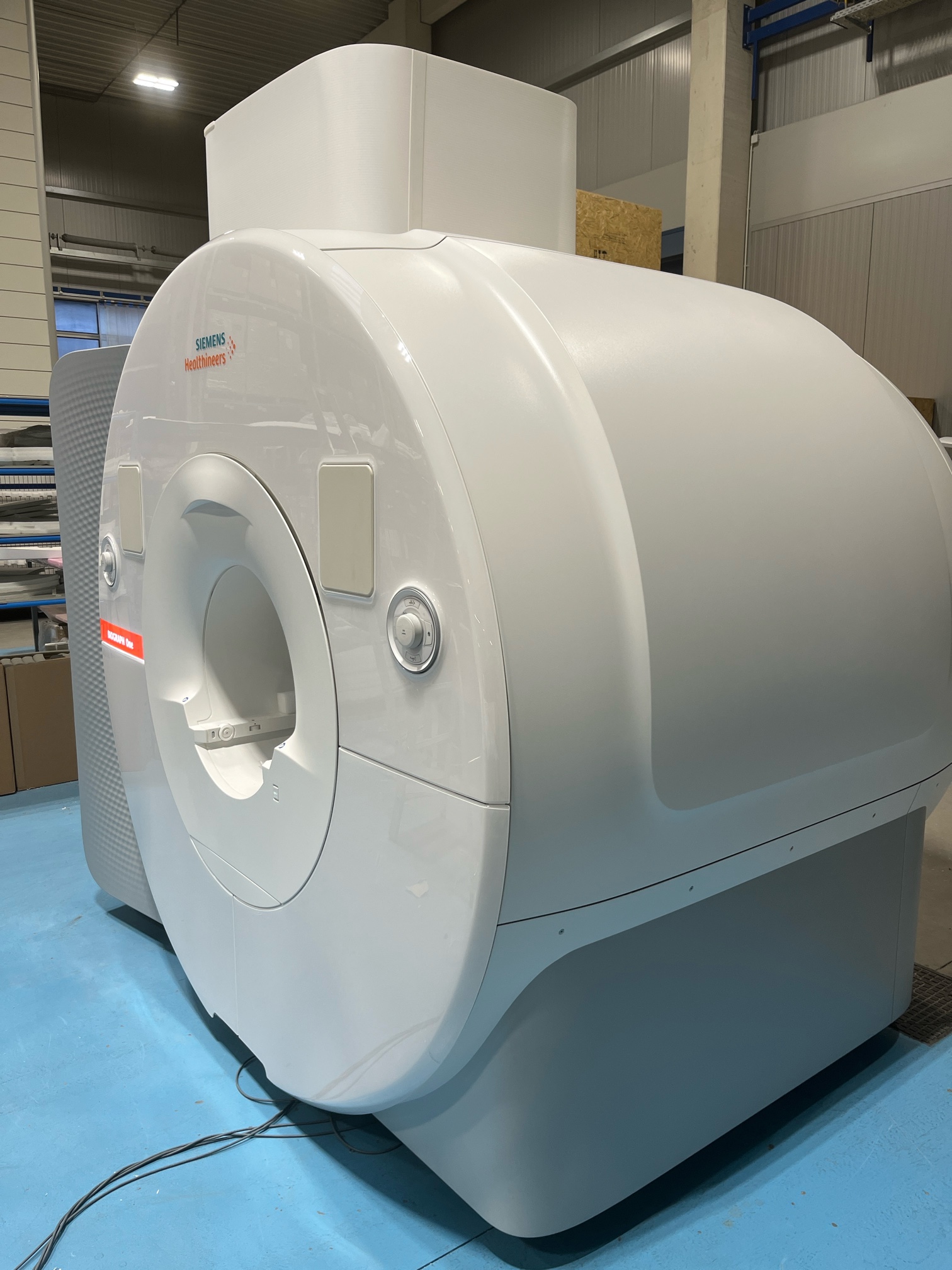
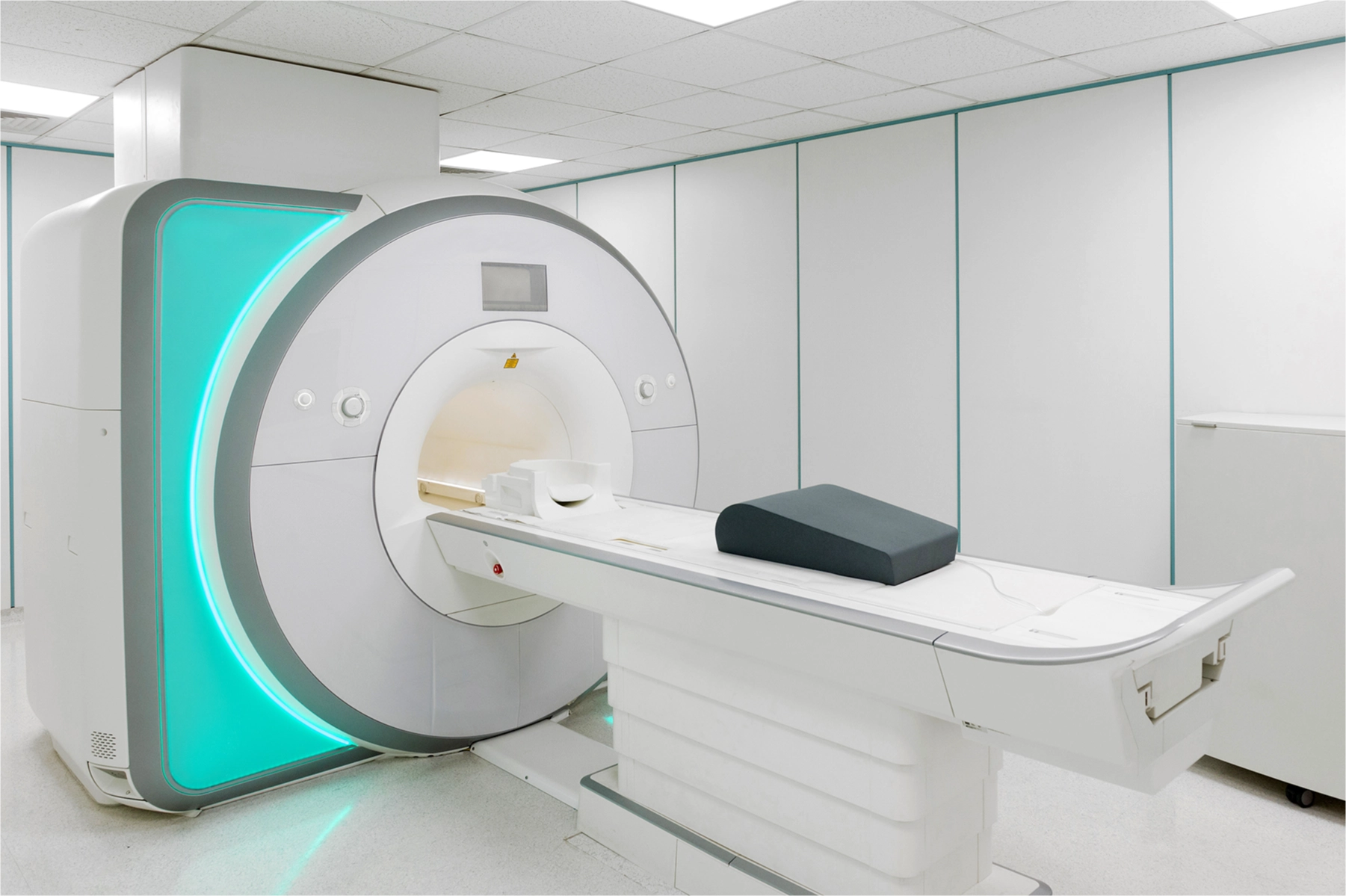
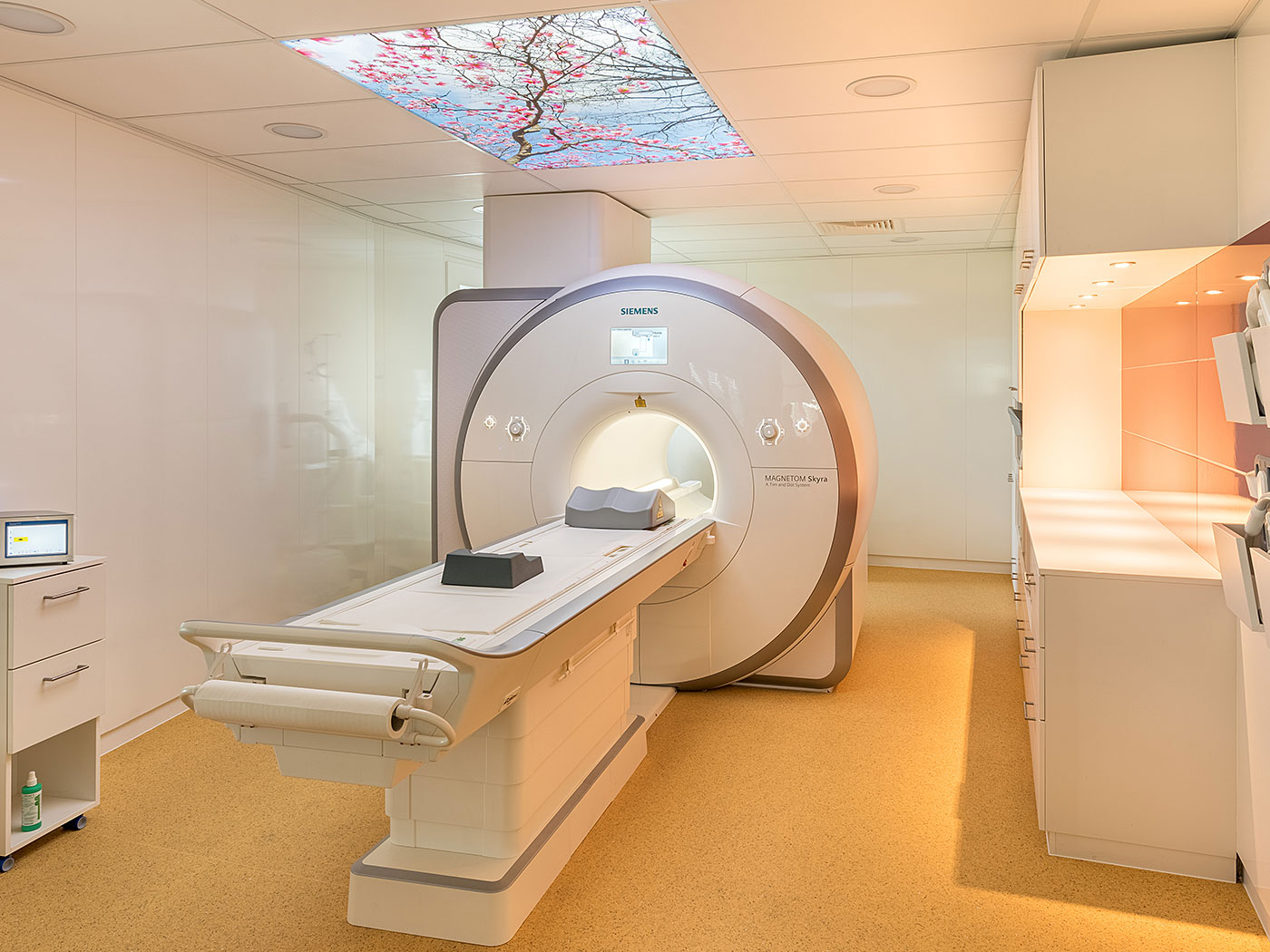
Carbon Composites has been developing and series-producing the upper housing elements of the Siemens Healthineers MAGNETOM Skyra Fit MRI system since 2020. The non-metallic, RF-transparent composite housings deliver Class A surface quality, UL94 V-0 flame retardancy, and full resistance to hospital-grade disinfectants.
Engineering Challenge and Solution
The customer ordered three upper components of the 3 Tesla MRI system developed by Siemens, which needed to fit together precisely. The component geometries had to be adapted to closed Light RTM technology while guaranteeing that the housings cause absolutely no magnetic interference during imaging.
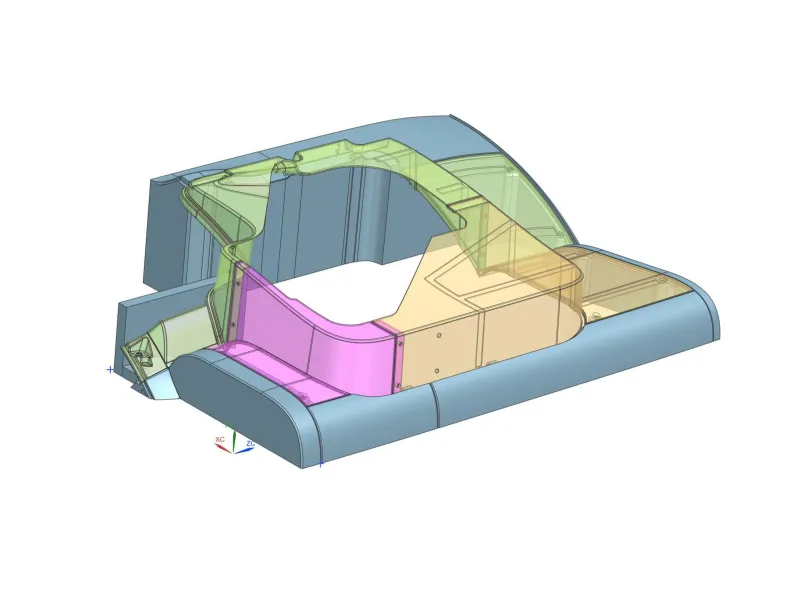
Domes and ribs had to be designed perpendicular to the tool parting line, and complex trimming edges were mapped using 3D scanning. Completed prototypes underwent trial assembly, followed by further geometric modifications. Taking all this into account, the B-side of the RTM tooling was built only after the final geometry was approved.
Technological Innovation and Precision
Harmonising complex design with industrial-scale manufacturability required innovative solutions for every challenge. The complex geometries were successfully optimised for the highly efficient Light RTM (Resin Transfer Moulding) technology.
To achieve perfect accuracy, we employ 3D laser scanning, which ensures unparalleled fitment for dome structures and ribbing, so that every complex trimming edge falls perfectly into place. Structural integrity is further enhanced by integrating shaped rib stiffeners and metric brass inserts directly into the composite matrix.
Multi-Stage Tooling
One unique aspect of the project was managing intermediate geometry states. Before the final tooling was built, the geometry went through multiple iterations:
- Recording and documenting intermediate geometry states
- Prototype trial assembly at the Siemens site
- Implementing geometry modifications based on feedback
- Building the final B-side RTM tooling based on the approved geometry
Advanced Materials and Manufacturing Technology
Our manufacturing process is specifically designed for the strictest hospital environment requirements. We combine Light RTM technology with high-precision 5-axis CNC machining and expert mechanical finishing.
Material selection is of critical importance for diagnostic equipment. Our specialised material technology rests on three pillars:
- Maximum safety: The materials used fully comply with UL94 V-0 flame retardant standard requirements. Material qualification was completed through laboratory testing and trial production runs.
- Diagnostic integrity: Our housings are 100% MRI-compatible and completely metal-free, non-magnetic in composition, guaranteeing zero interference during imaging.
- Durability: The ultra-high quality (Class A) surfaces are engineered to withstand the most rigorous hospital disinfection protocols and chemicals over the long term.
Production and Logistics
One key to the project is precise project management and quality assurance. A set built into a single unit comprises multiple components, which are produced on schedule and delivered to the customer in custom-designed crates suitable for protecting painted components.
Medical device supplier status demands particularly stringent quality assurance. Through continuous improvements, we have successfully optimised production cycle times and improved cost efficiency while maintaining quality at the highest level.
Medical Device Housings at Carbon Composites
Carbon Composites has specialised in the low- to medium-volume production of housings for medical devices and other equipment over the past decade. Our partners include Philips, Siemens, and DiaCare, among others.
The volume and geometry determine the technology applied:
- Complex rib structures and greater wall thickness — PU-RIM technology is the winning choice
- Large free surfaces — Light RTM technology delivers the best results