

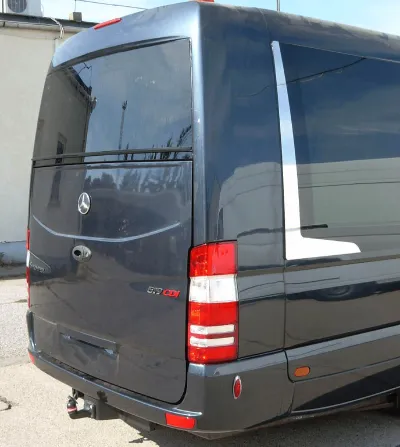
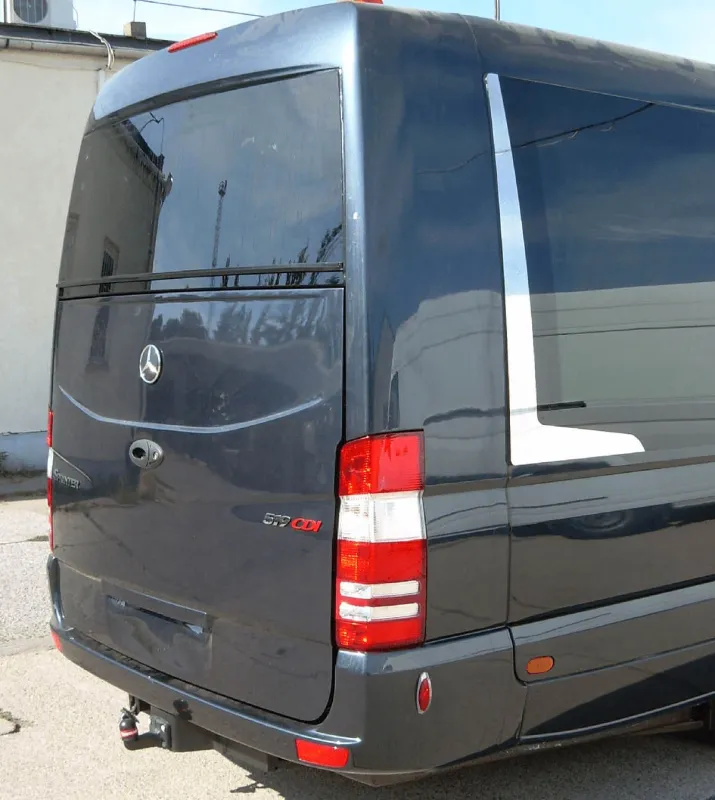
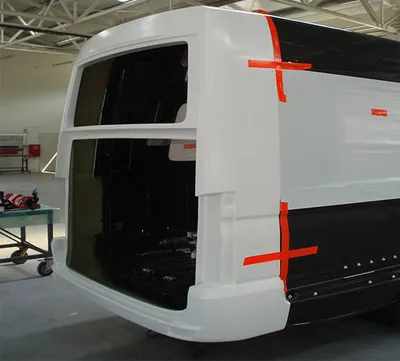
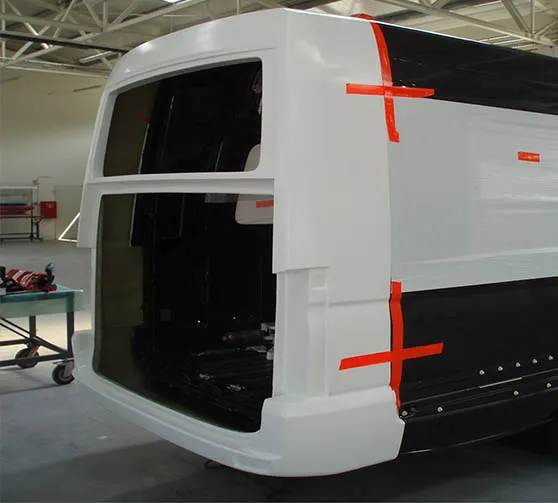
In a nutshell: Within the Mercedes Sprinter composite conversion project we manufacture interior panels, cabin extensions and special superstructures for the Daimler Group. GRP panels produced with RTM and vacuum-forming technology are 30% lighter than steel, while providing improved thermal and acoustic insulation as well as corrosion resistance.
The Mercedes Sprinter Project Background
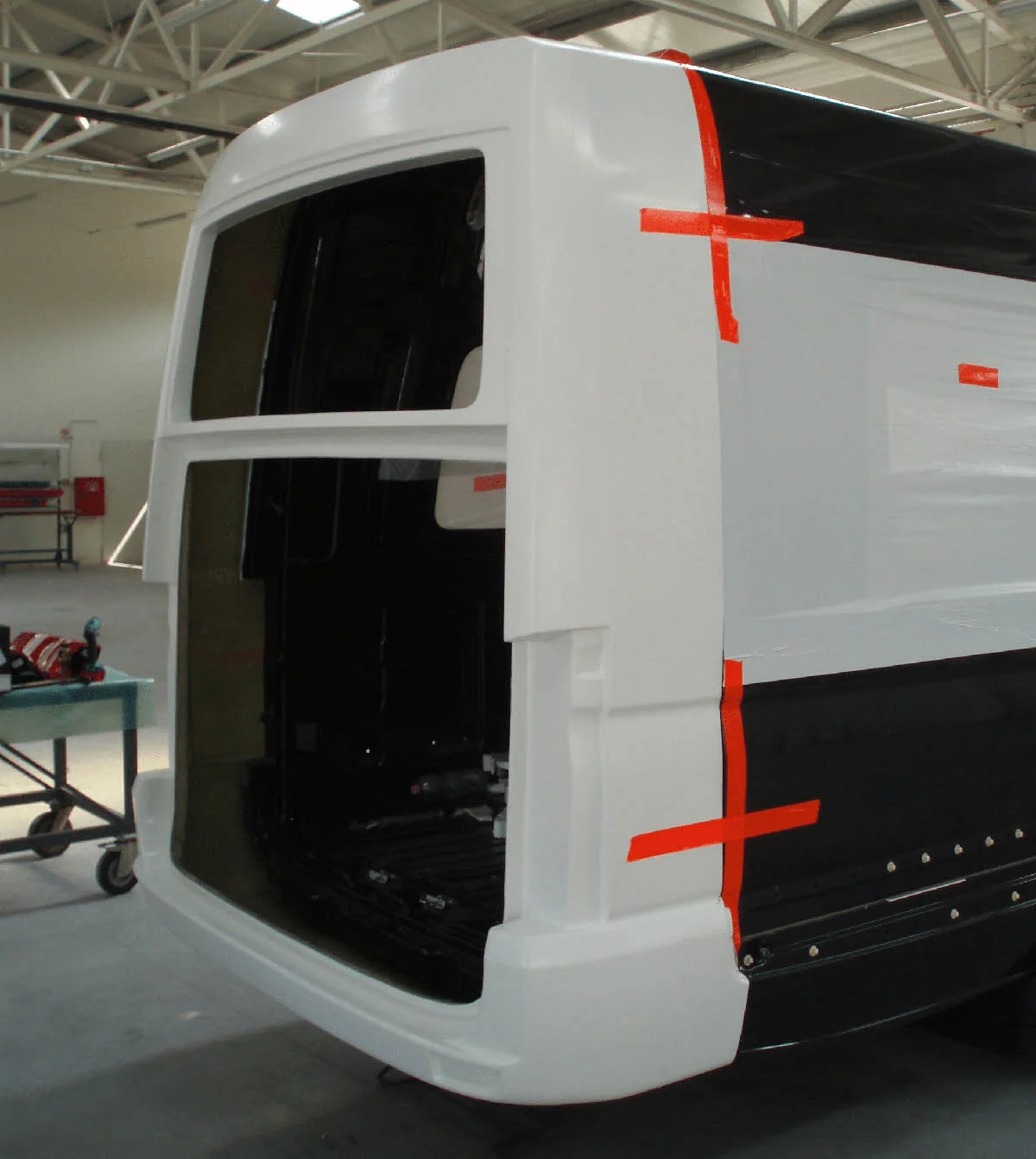
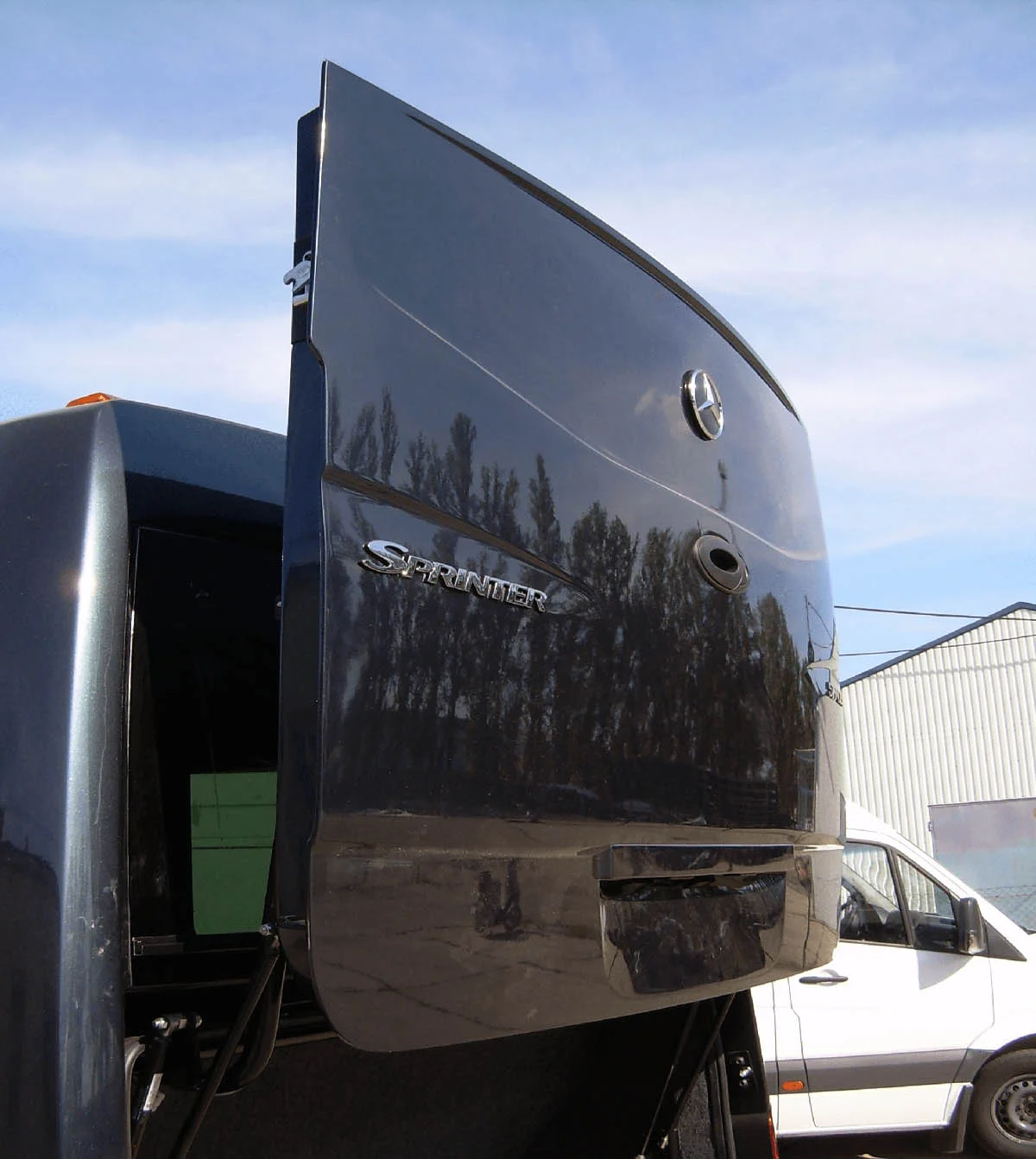
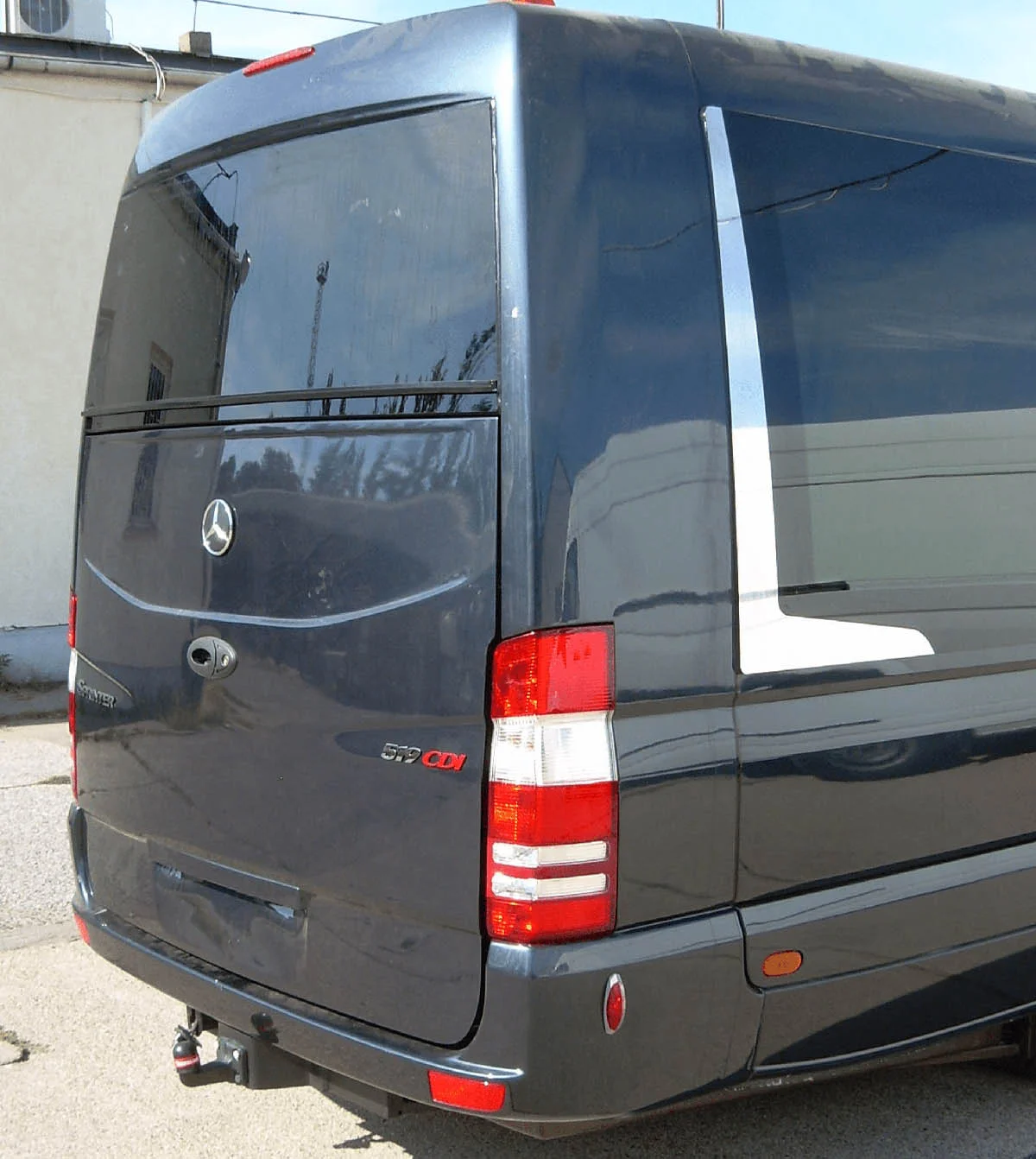
The Mercedes Sprinter is one of the defining models on the commercial vehicle market, used worldwide for transport, services and special purposes. Daimler Minibus AG approached Carbon Composites Ltd. in 2015 to develop composite-based solutions for various Sprinter generations and body variants.
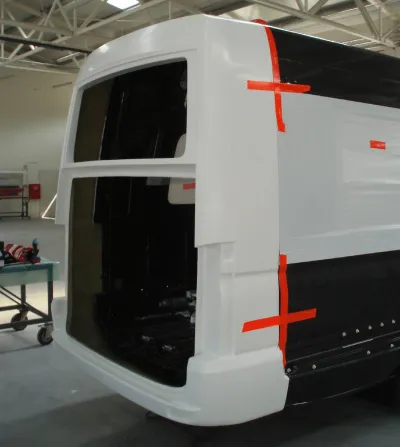
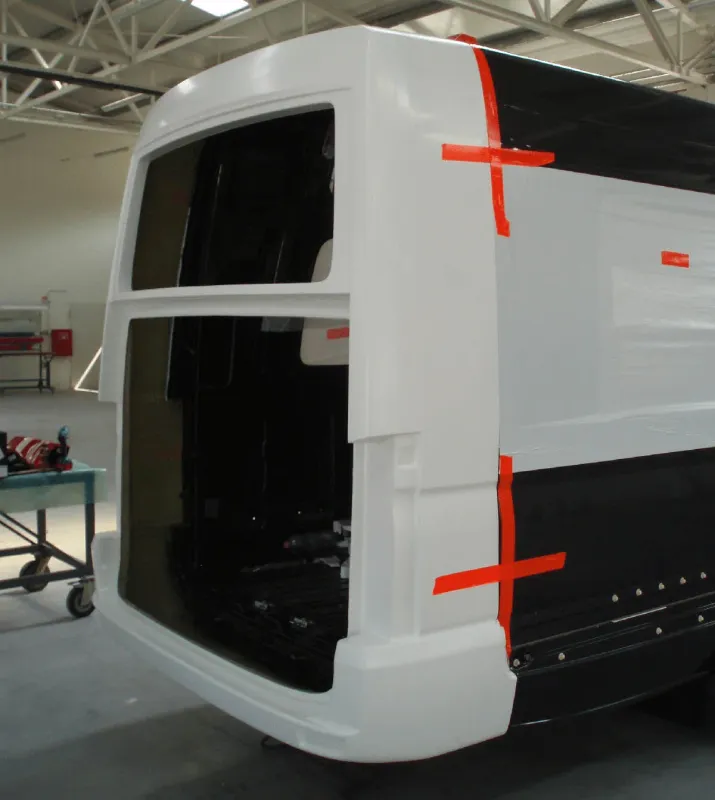
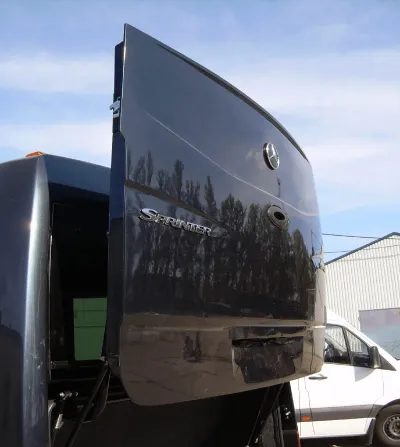
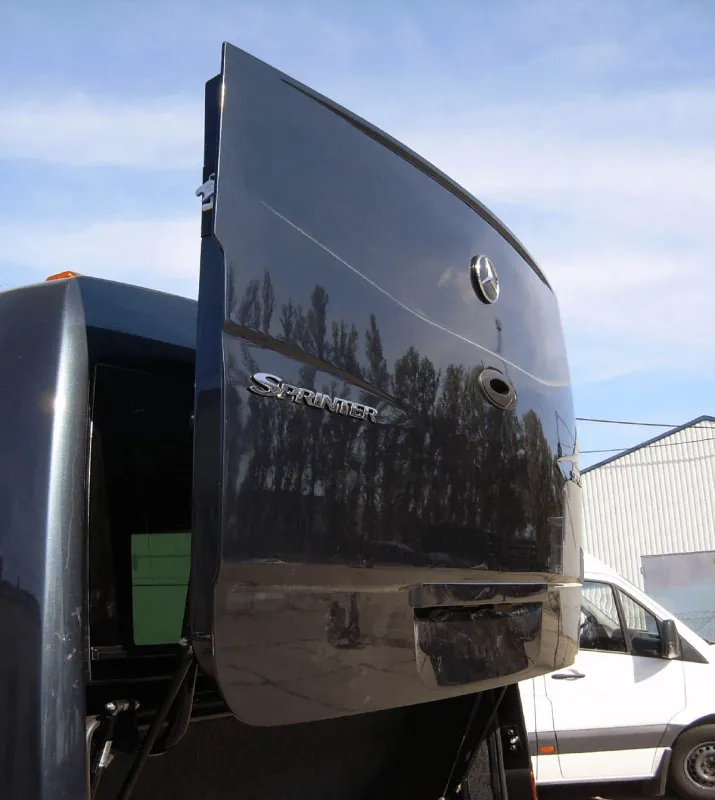
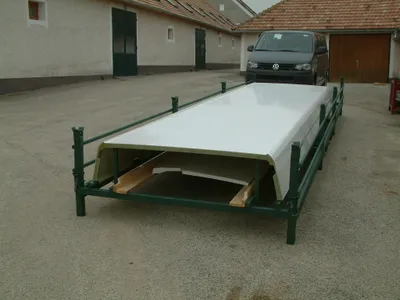
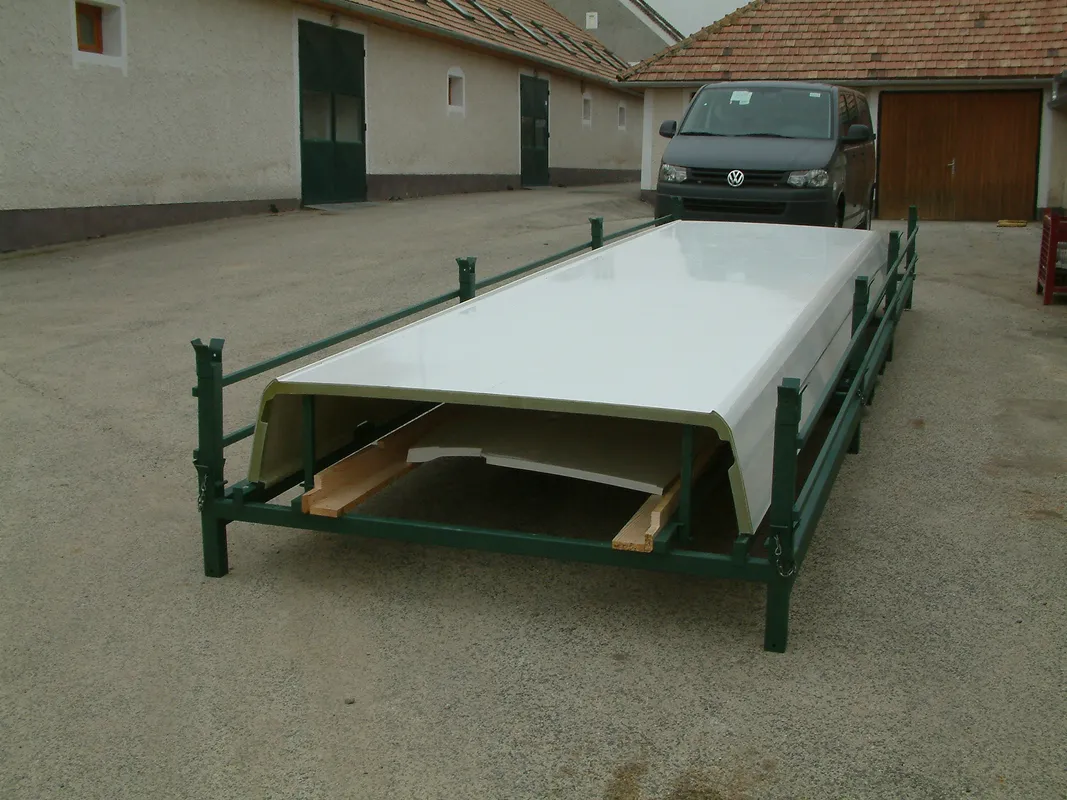
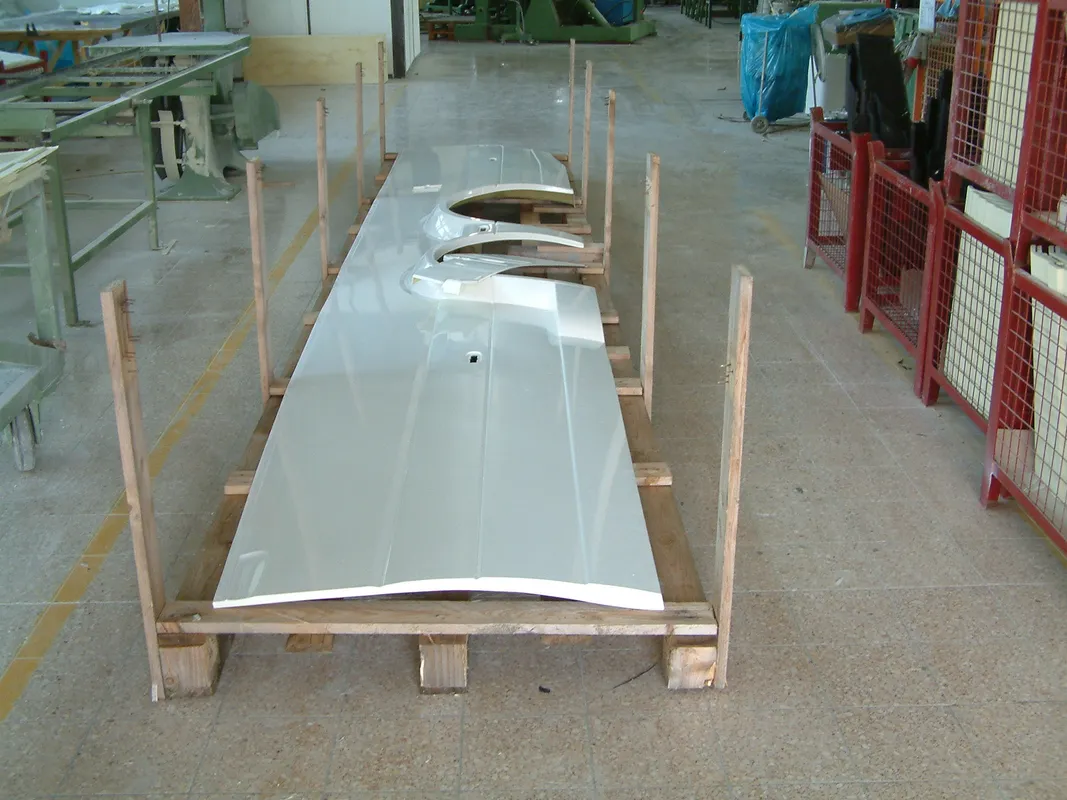
.CRcXk17y_1vzTMq.webp)
.CRcXk17y_Z2rYQxJ.webp)
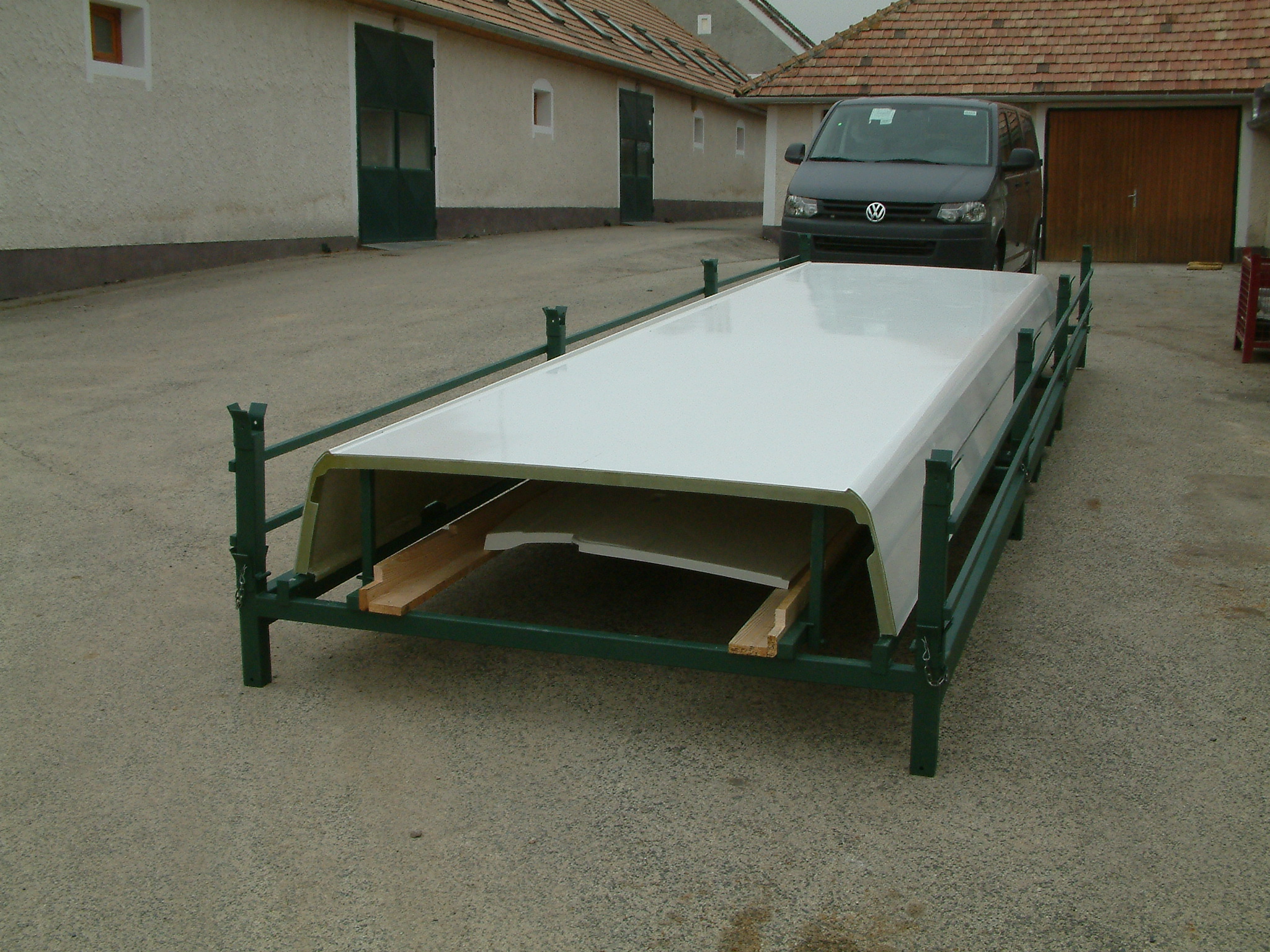
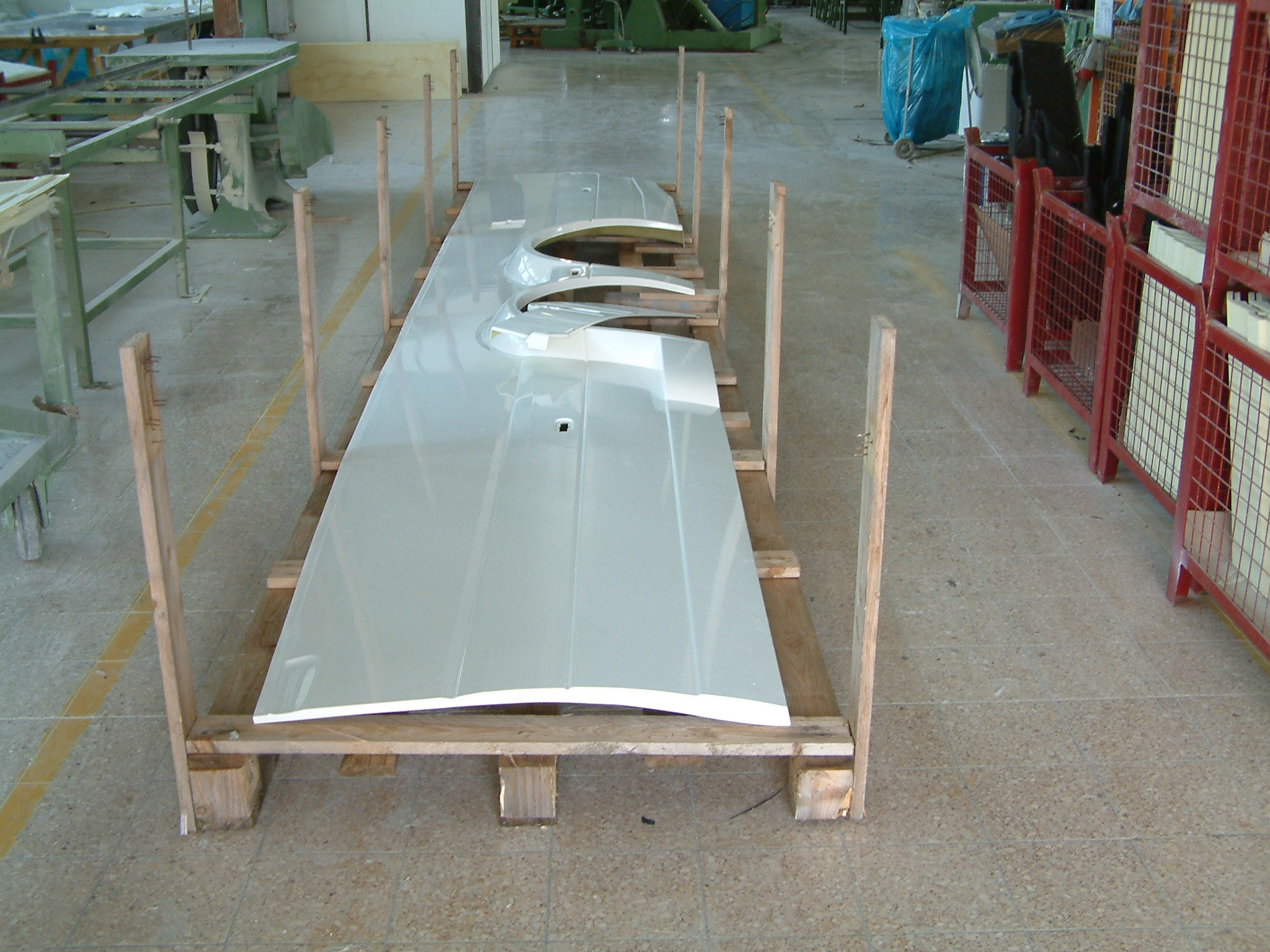
.CRcXk17y.JPG)
At project launch the main challenges with the factory steel cargo area were:
- Corrosion: Metal panels are prone to rusting, especially in salt-treated road conditions
- Weight: Steel panels add significant mass, increasing fuel consumption
- Thermal insulation: Metal is an excellent conductor, so the cargo area overheats in summer and chills in winter
- Noise: Sheet-metal resonance raises cabin noise levels
- Cleanability: The factory coating damages easily and is hard to clean
Development Process & Technological Solutions
Material Selection & Design
The specifications were developed jointly with Daimler’s engineers. The final material choice was glass-fibre-reinforced polyester (GRP) composite, providing an optimal balance of mechanical properties, cost and manufacturability.
Material system properties:
| Property | Value | Benefit |
|---|---|---|
| Density | 1.8 g/cm³ | 30% weight saving vs. steel |
| Flexural strength | 250+ MPa | Excellent impact resistance |
| Temperature range | -40 °C – +80 °C | Extreme conditions |
| Fire rating | ECE R118 | Meets automotive standards |
Panel design accounts for the different Sprinter variants’ geometry: L2H2, L3H2, L4H3 and other configurations. A dedicated tool set was developed for each variant, ensuring perfect fit.
Manufacturing Technologies
Two main technologies are used depending on the product type:
- RTM (Resin Transfer Molding)
Components subject to higher mechanical loads – floor panels, cargo-area liners – are produced with RTM technology. RTM advantages:
- Closed-mould production, consistent quality
- High fibre content (35-45%), excellent strength
- Smooth surface on both sides
- Reproducible wall thickness
- Vacuum Forming
Simpler-geometry trim elements and covers are vacuum-formed from ABS sheet:
- Faster cycle time
- Lower tooling cost
- Texturable surface
- Ideal for large series
Product Portfolio: Interior Panels & Superstructures
Modular Cargo-Liner System
Our most sought-after product is the complete cargo-liner kit, which includes:
- Side panels: 12-18 mm sandwich-structure elements with PU foam core
- Floor panel: Non-slip texture, up to 500 kg/m² load capacity
- Ceiling panel: LED lighting preparation, cable channels
- Bulkhead: Windowed or solid versions with acoustic insulation layer
- Door inserts: Sliding-door and rear-door interior panels
Pro tip: The biggest advantage of the modular system is that later additions – shelves, tie-down points, electrical outlets – can be simply integrated into the already-installed liner without removing it.
Cabin Extension (Sprinter Stretch)
As part of custom projects we also perform cabin extensions by adding length to the factory body:
- Extension length: 300-800 mm as required
- Process: Body sectioning, structural insert, composite panelling
- Applications: Ambulances, VIP shuttles, mobile offices
Cabin extension is particularly popular for ambulance conversions, where the enlarged interior accommodates modern medical equipment. Our partners include several European emergency services that regularly order converted vehicles from us.
Special Superstructures
Beyond standard panels we also build custom superstructures:
- Refrigerated body: Sandwich-structure panels, 40-80 mm insulation
- Shelving systems: Integrated aluminium-frame storage units
- Electrical fitout: Inverters, chargers, lighting – complete wiring
- Branding elements: Wrapping, painting, logos to customer specifications
Quality Assurance & Certifications
As a Daimler Group supplier we meet strict quality requirements:
Standards and certifications:
- ISO 9001:2015 – Quality management system
- IATF 16949 – Automotive quality management (in preparation)
- ECE R118 – Vehicle interior material flammability
- FMVSS 302 – US flammability standard (for export projects)
Full traceability is ensured for every production batch: from raw-material certificates to final-inspection reports, all documents are available. During our painting and surface-treatment processes we verify colour accuracy with a spectrophotometer, ensuring an exact match with Mercedes factory colours.
Logistics & Delivery
Depending on the project type we operate two delivery models:
- Component supply to conversion workshops
- Packaged panel kits with installation guides
- More than 20 partner companies across Europe use our elements
- Complete vehicle conversion
- The vehicle arrives at our facility for full conversion, then return delivery
- Lead time: 2-4 weeks depending on complexity
Sustainability & Environmental Awareness
Composite materials also offer environmental benefits:
- Weight saving → lower consumption: 30% lighter panels translate to roughly 3-5% fuel saving over the vehicle’s lifetime
- Long service life: Composite elements last 15+ years, whereas steel panels corrode within 5-8 years
- Recyclability: GRP composites are ground and reused as construction-industry additives
Project Results & Figures
- 200+ converted vehicles since 2015
- 20+ active European partners (conversion workshops, fleet operators)
- 0 warranty claims in the past 3 years
- 30% weight saving versus factory steel panels
- 8-12 dB noise reduction in the driver’s cabin
Frequently Asked Questions
How long does a complete cargo-liner kit take to produce? From stock: 3-5 working days; custom production: 2-3 weeks.
Can the liner be modified afterwards? Yes, the modular system allows shelves, tie-down points or electrical outlets to be added later.
Which Sprinter generations do you make panels for? We currently offer a full product range for the W906 (2006-2018) and W907/910 (2018-) generations.
What warranty applies to the products? We provide a 5-year warranty against material and manufacturing defects on all panel elements.
Related Projects
The experience gained in the Mercedes Sprinter project is also applied in our other commercial-vehicle projects. See our related references:
- VW Amarok hardtop – Premium pickup superstructure
- VW T5 Transporter cabin – OEM supplier project
- RedBull promotional car – Custom body components