

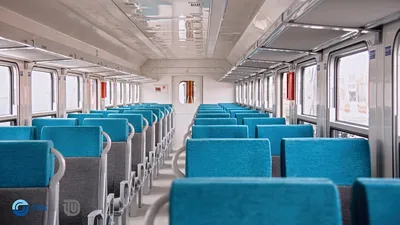
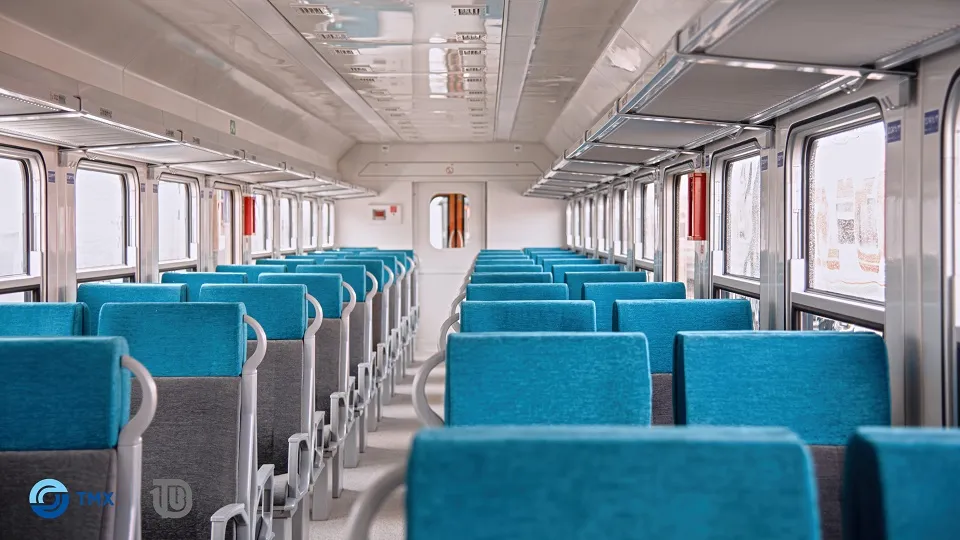
As a Tier 1 strategic partner, Carbon Composites manufactures the complete interior composite panel system for the 1,350-unit Egyptian railway coach fleet, commissioned by GANZ-MAVAG. The project demands a daily output of 1 tonne of composites, management of 200+ different parts, and EN 45545-2 fire protection compliance — the largest volume order in our company’s history.
Project Background
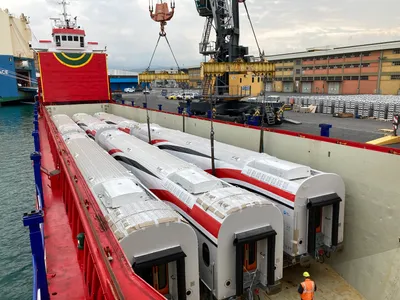
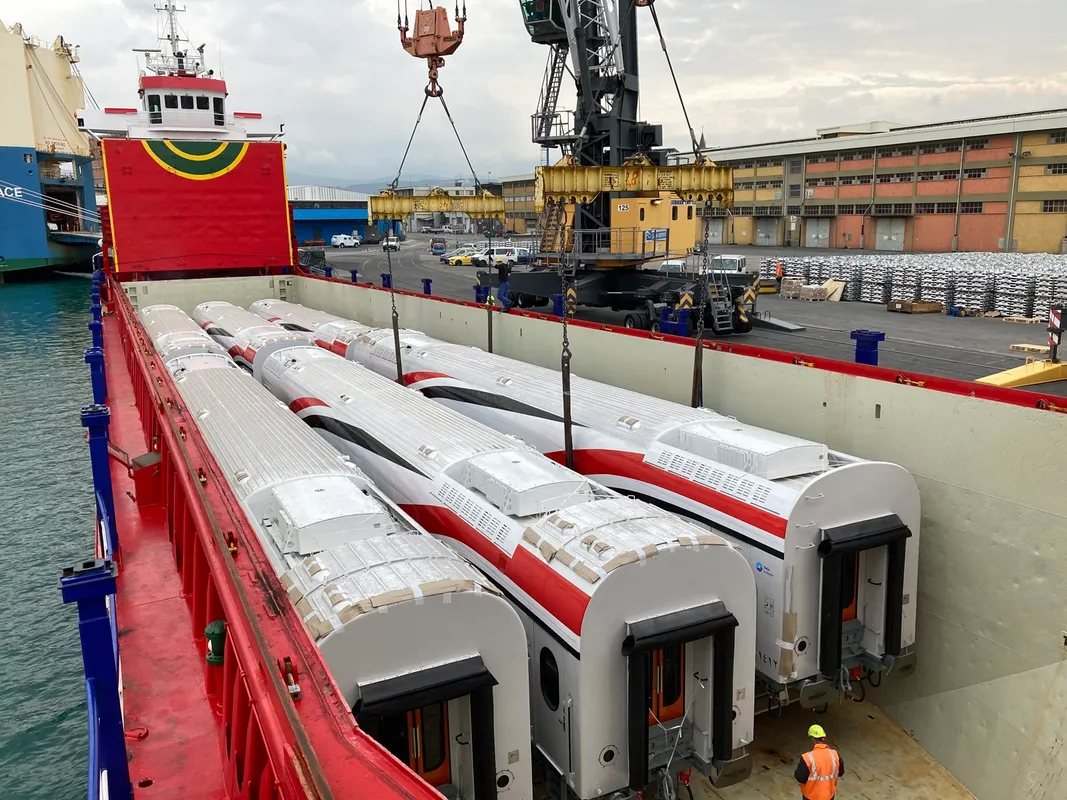
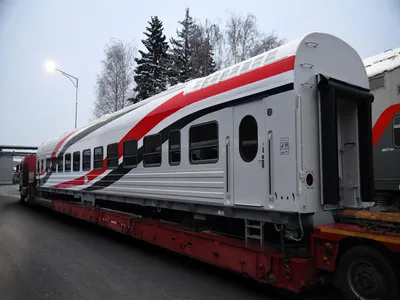
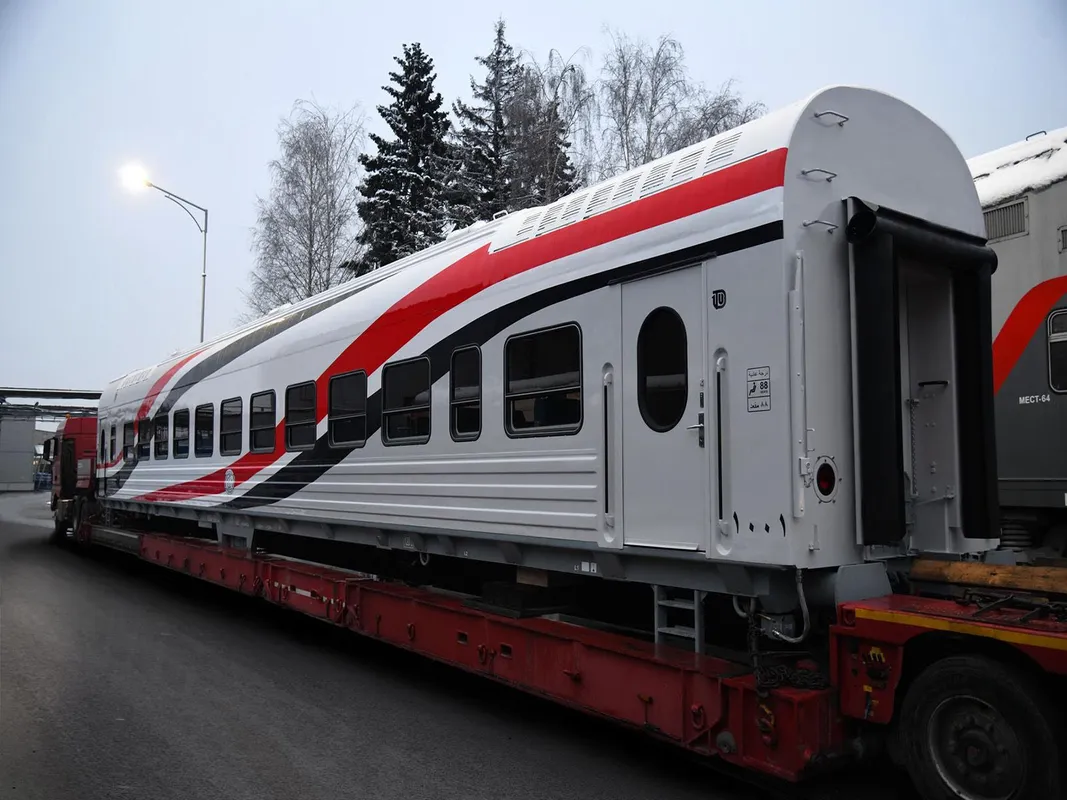
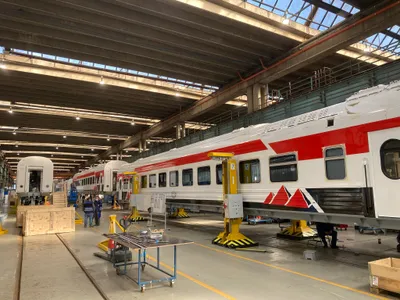
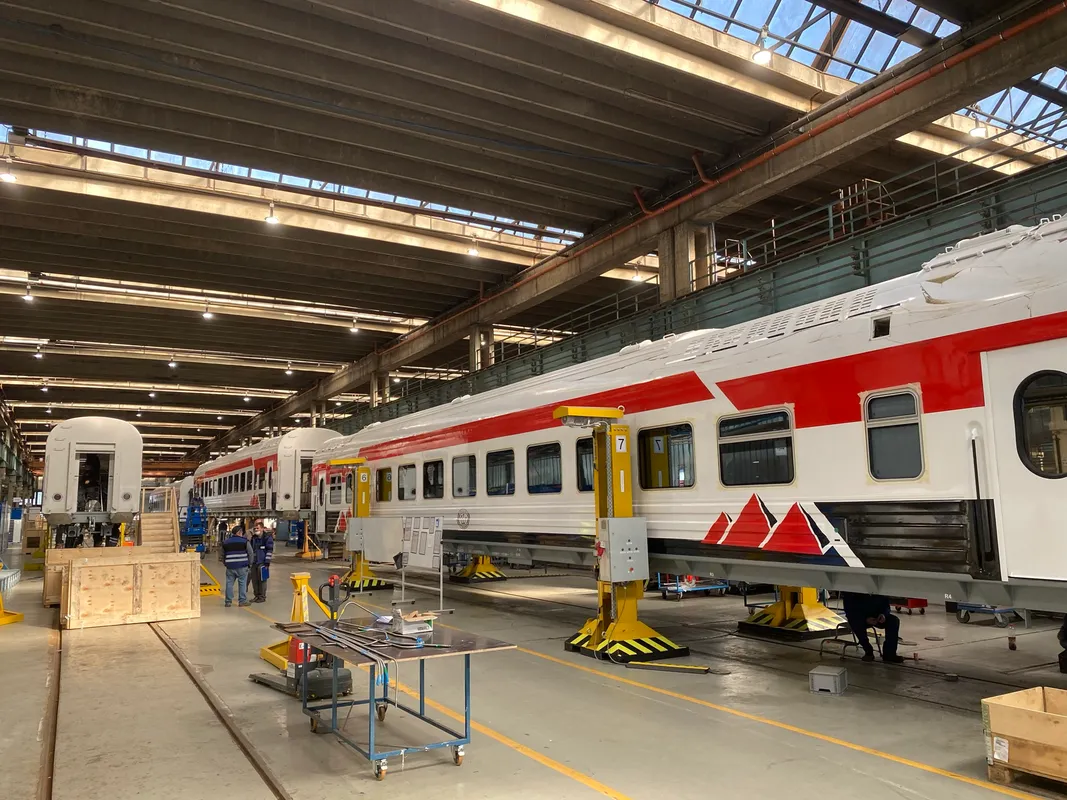
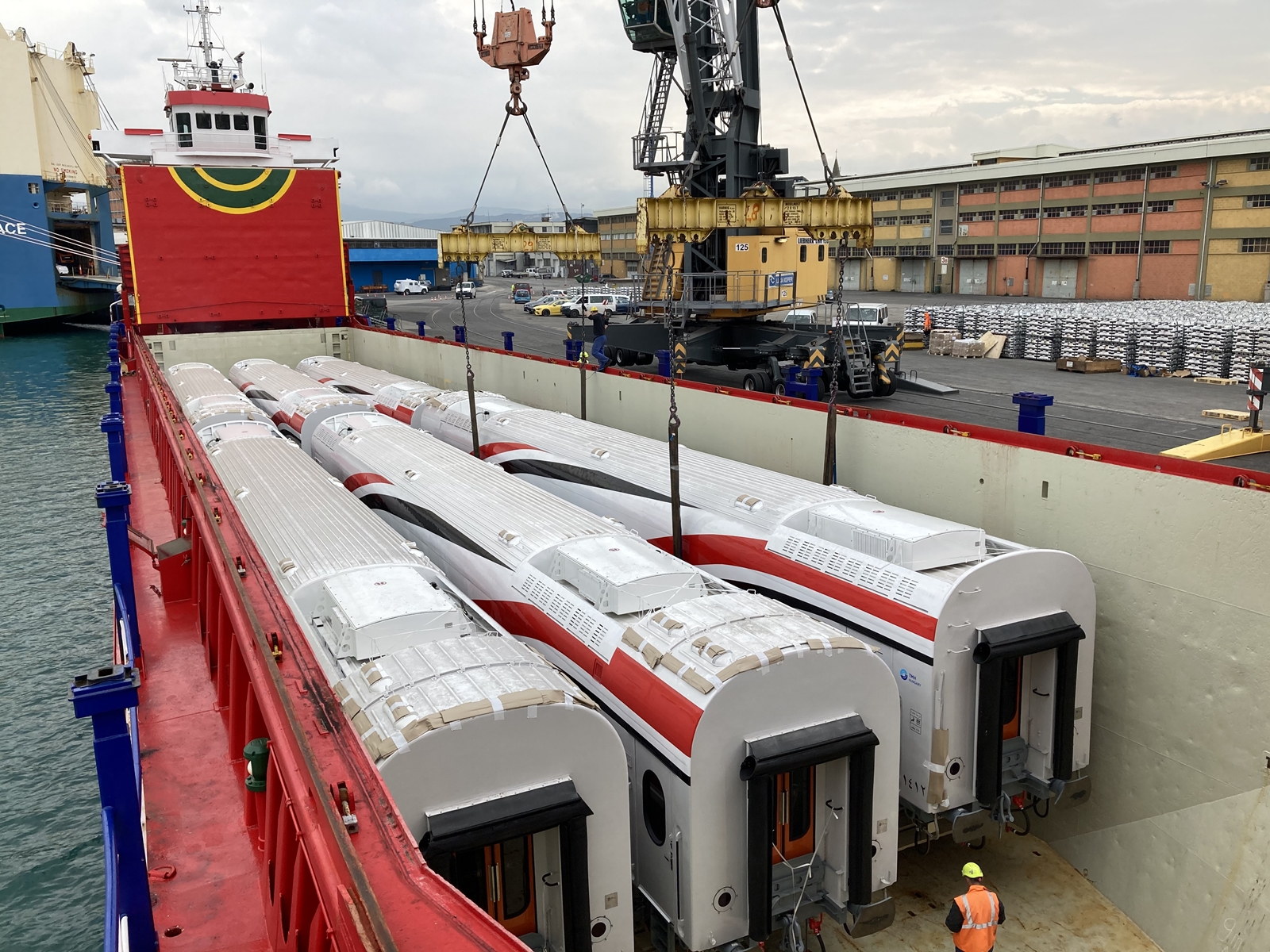
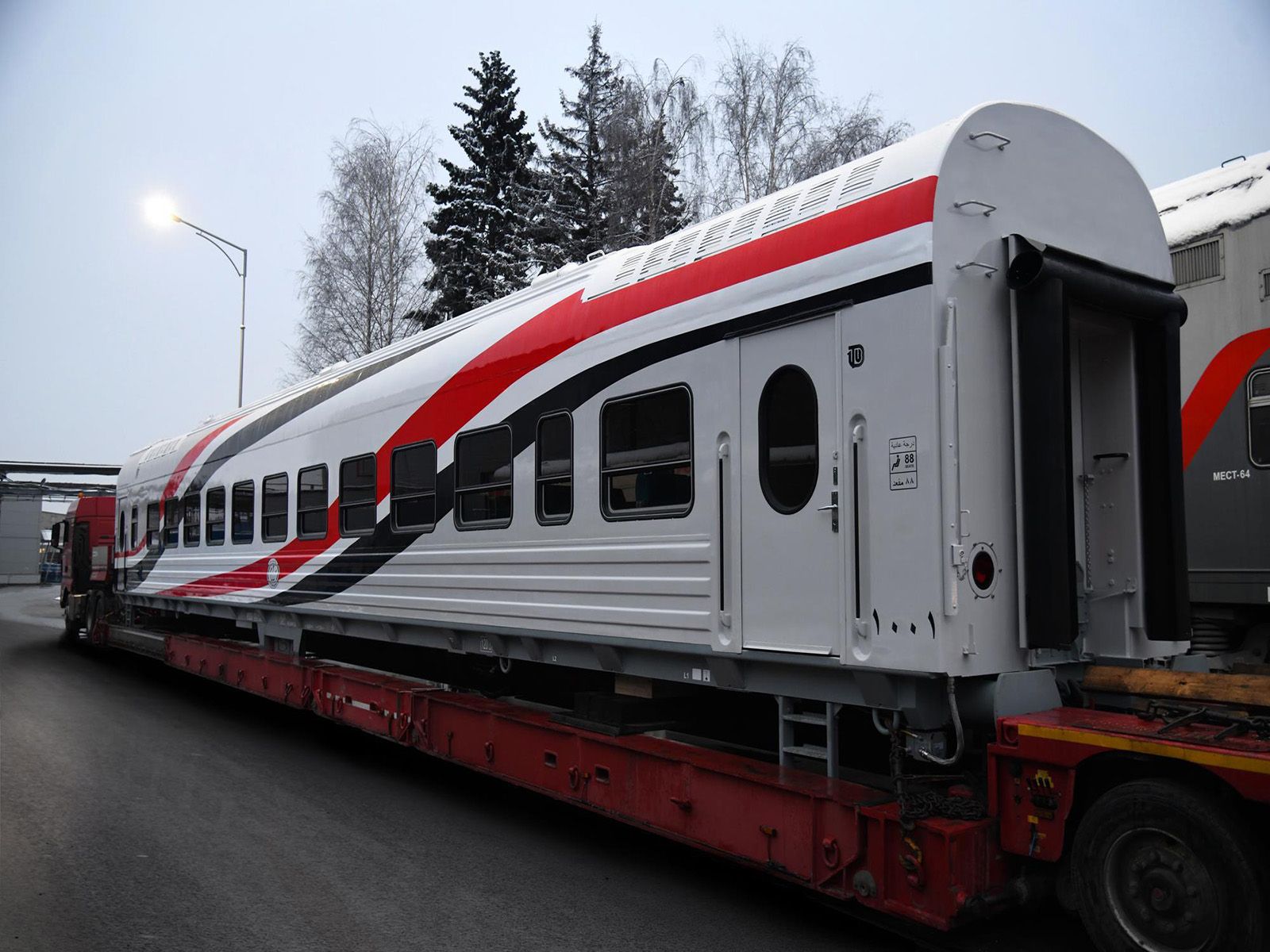
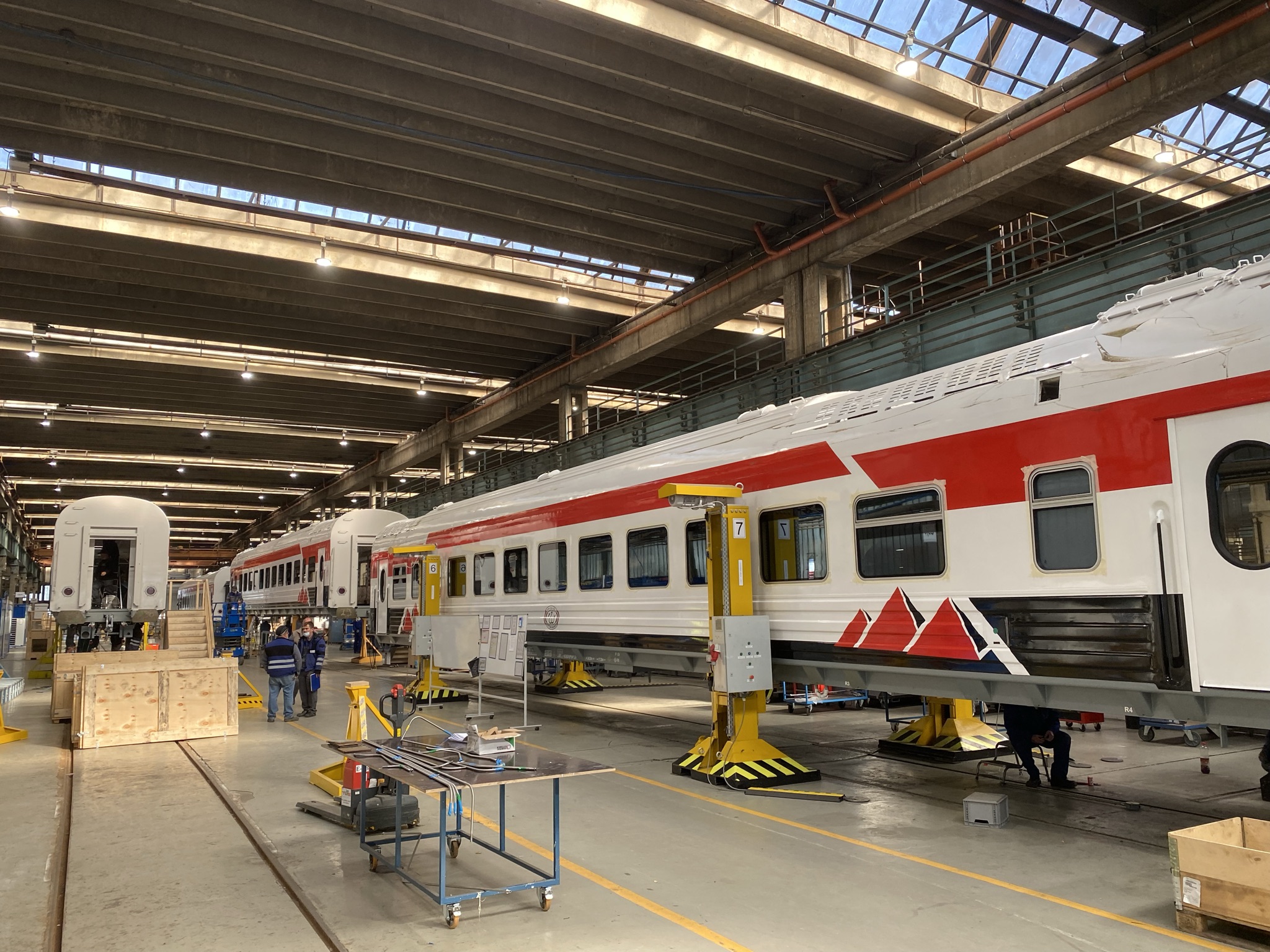
One of the largest railway export deals in Hungarian history is currently underway: the manufacture of 1,350 passenger coaches for the Egyptian National Railways (ENR), valued at approximately €1 billion. Under the project led by GANZ-MAVAG, coaches are continuously arriving at the Port of Alexandria — by early 2025, more than 1,000 coaches had already been delivered.
The order comprises five coach types:
| Type | Quantity | Designation |
|---|---|---|
| Third class, dynamic ventilation | 500 pcs | 3DV |
| Third class, air-conditioned | 460 pcs | 3AC |
| Second class, air-conditioned | 210 pcs | 2AC |
| First class, air-conditioned | 105 pcs | 1AC |
| Buffet car (2nd and 3rd class) | 75 pcs | 2ACB / 3ACB |
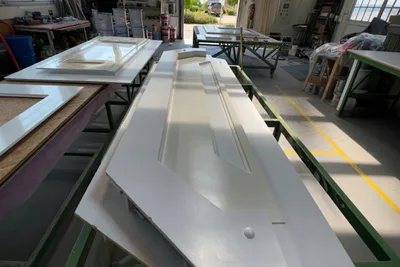
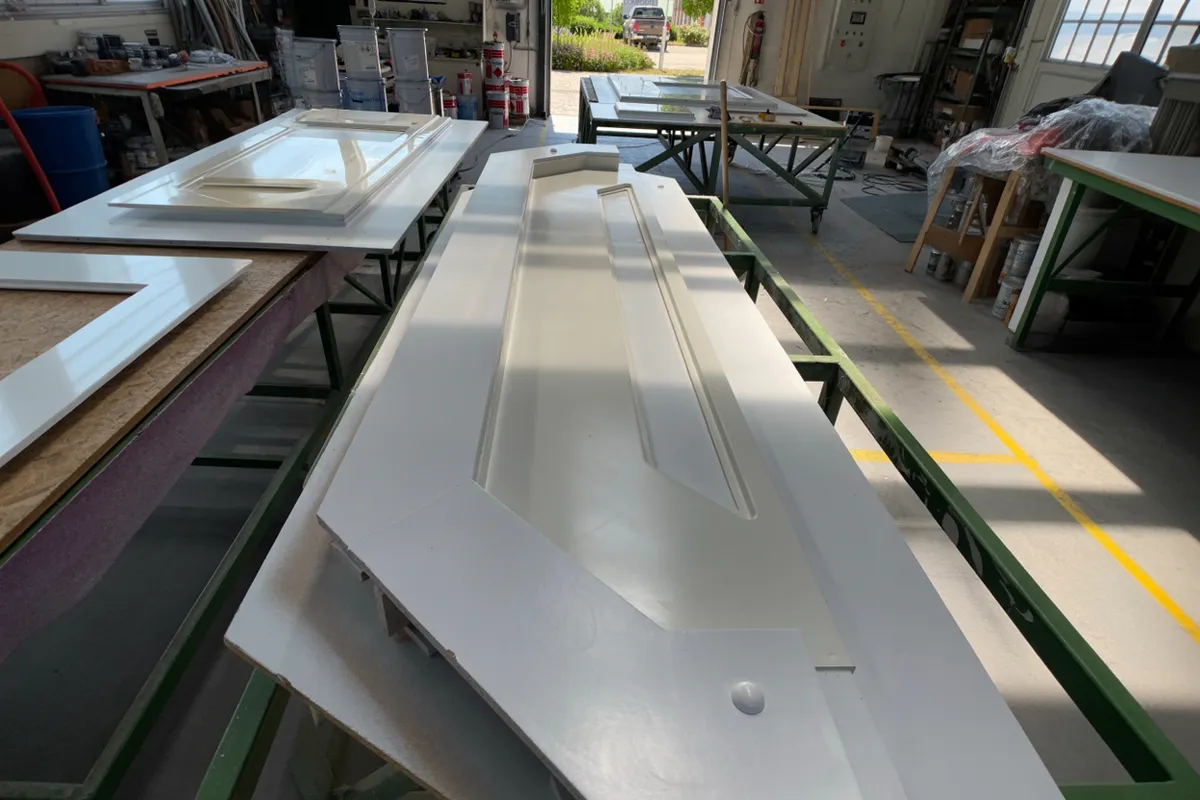
Carbon Composites’ Manufacturing Role
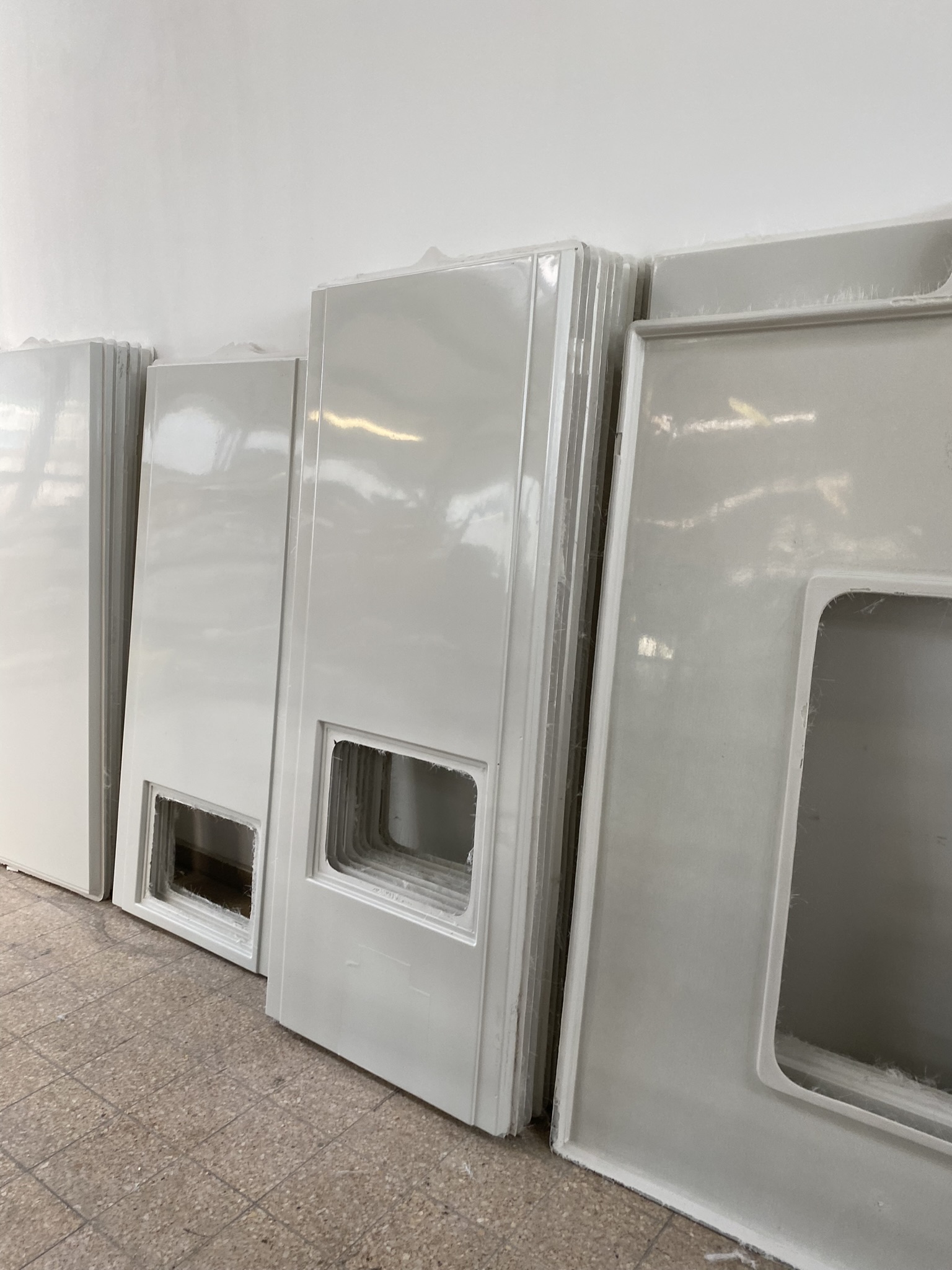
Several companies submitted bids for the interior panel production — Carbon Composites was selected as the primary supplier based on capabilities and pricing. The collaboration began with third-class coaches, where plastic panels were removed and the geometry was captured through reverse engineering to develop tooling.
The series tooling served throughout the entire third-class coach production. Tooling for first-class, second-class, and buffet coaches was built from 3D surface data and is currently in active production use.
Challenges and Solutions
The project presented exceptionally complex technical and organizational tasks:
- Material selection and standards: Simultaneous compliance with three parallel regulatory frameworks — Russian GOST 12.1.044-89, European EN 45545 (R3/R7 component groups, HL2/HL3 hazard levels), and Egyptian ENR standard #1843 (2002).
- Manufacturability: Complex geometries and high volumes required automated production — automatic gel-coat spraying, robotic CNC trimming, and process optimization.
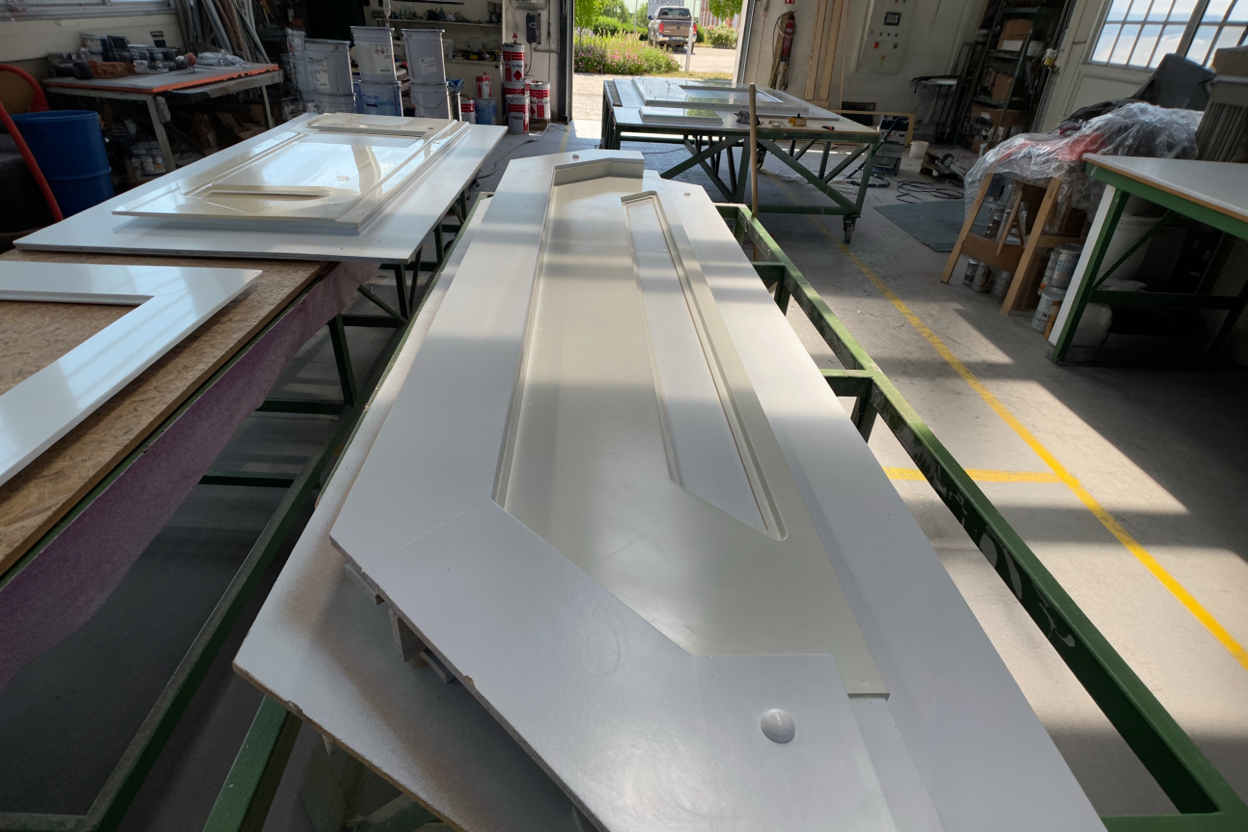
- Surface quality: Colour deviation management and validation of railway coating systems with 100% gloss and RAL 9001 colour compliance.
- Production ramp-up: Gradual scaling to 90+ parts per day, covering the complete interior panel system of one railway coach.
- Quality assurance and traceability: Unique identifiers and complete production documentation for every single part.
- Logistics: Delivery in custom-designed crates to protect painted components.
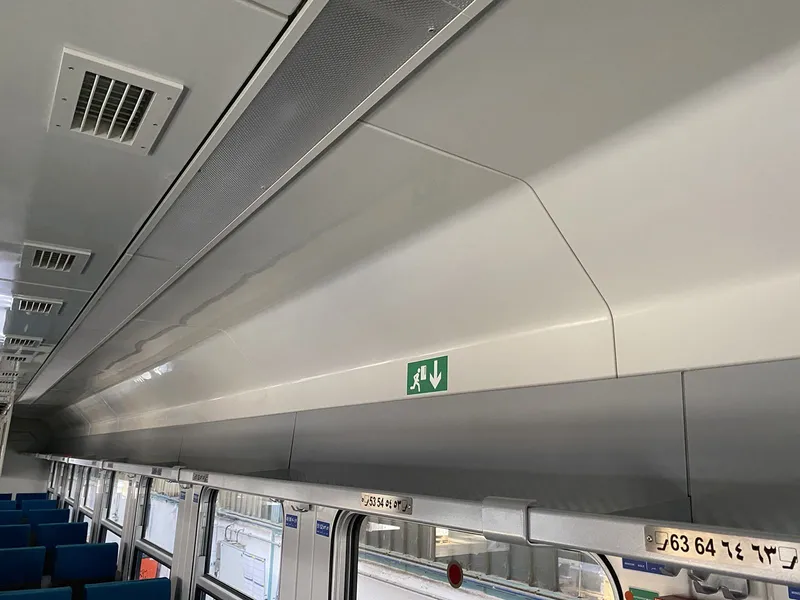
Manufacturing Technology and Materials
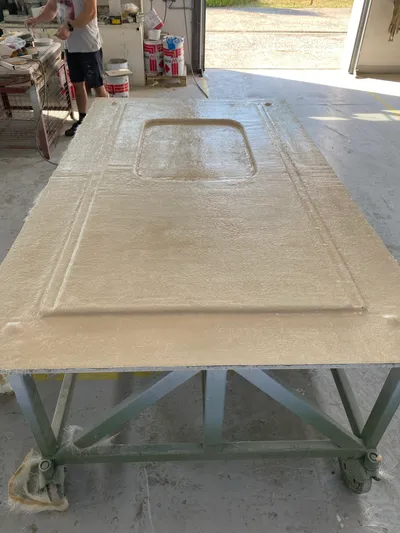
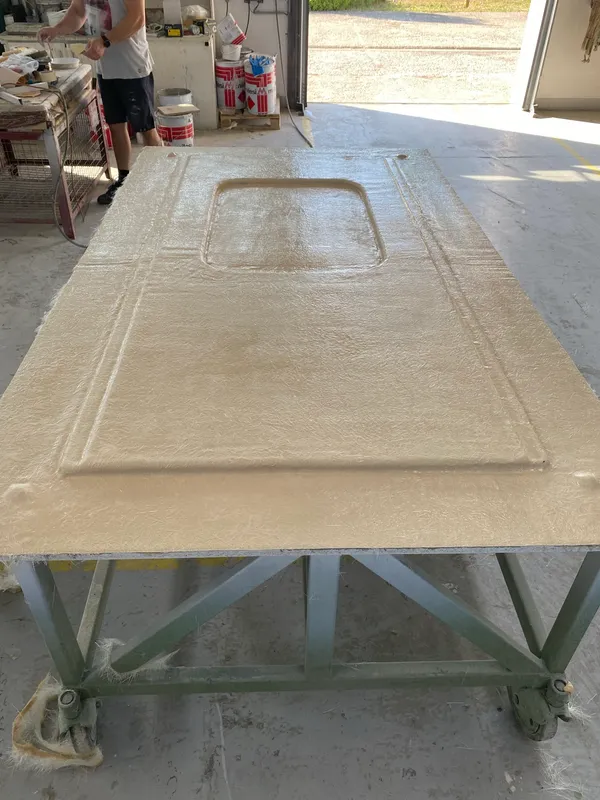
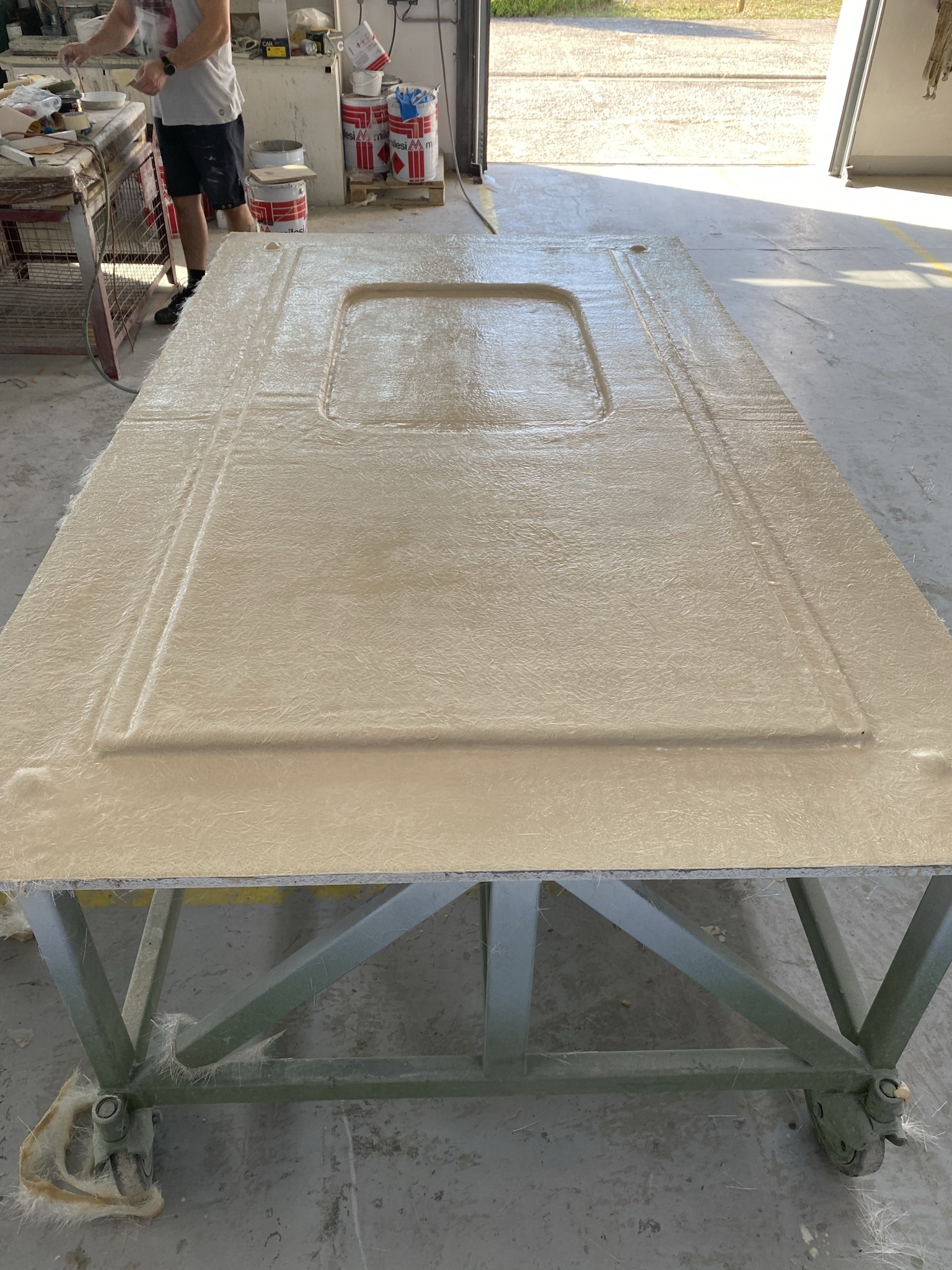
The backbone of the project is high-throughput Light RTM technology. Production processes were optimized to enable daily output of a complete interior panel system for one railway coach — equivalent to 1 tonne of composites per day.
Applied Technologies
- Large-format Light RTM moulds designed for extreme-series use
- Robotic CNC trimming and mechanical machining for precise fitment
- Bent stainless steel profiles and welded frames per MSZ EN ISO 15085-3
- Flame-retardant railway painting with validated coating systems
Materials Used
- Resin systems meeting EN 45545 railway standards at HL2 and HL3 hazard levels
- Railway-standard coating systems with 100% validated gloss and RAL 9001 colour compliance
Manufactured Components
The project covers a wide range of interior architectural elements for all 5 coach types:
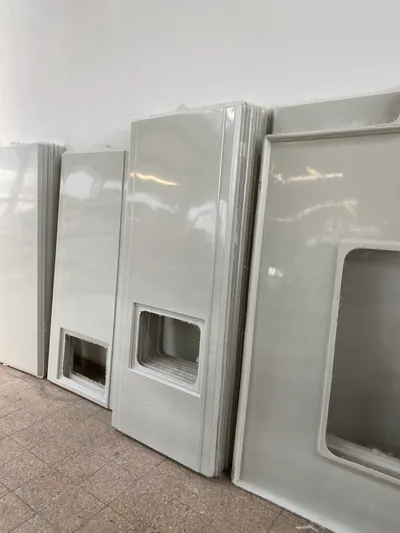
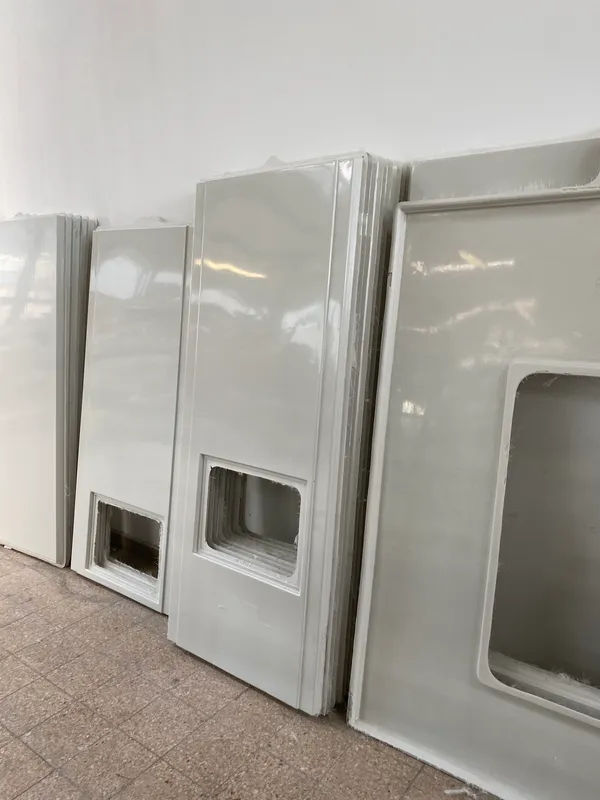
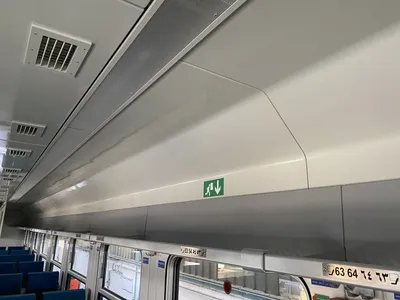
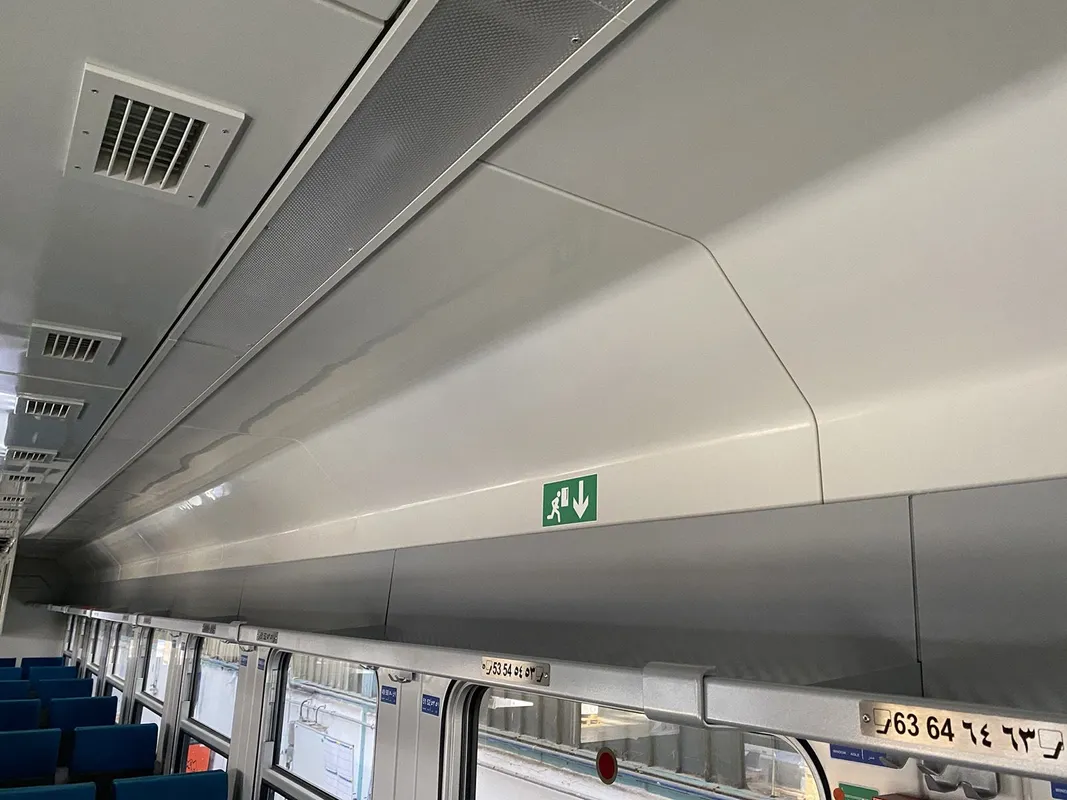
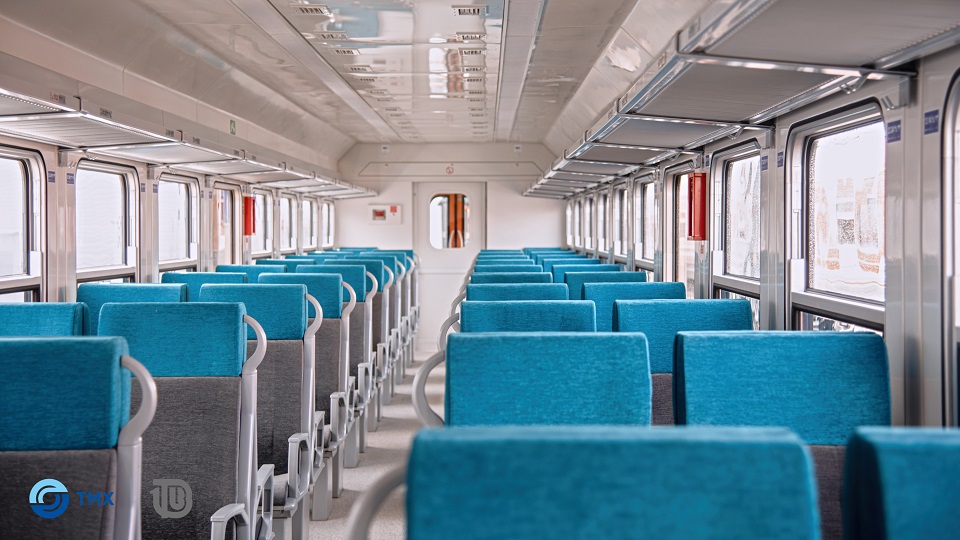
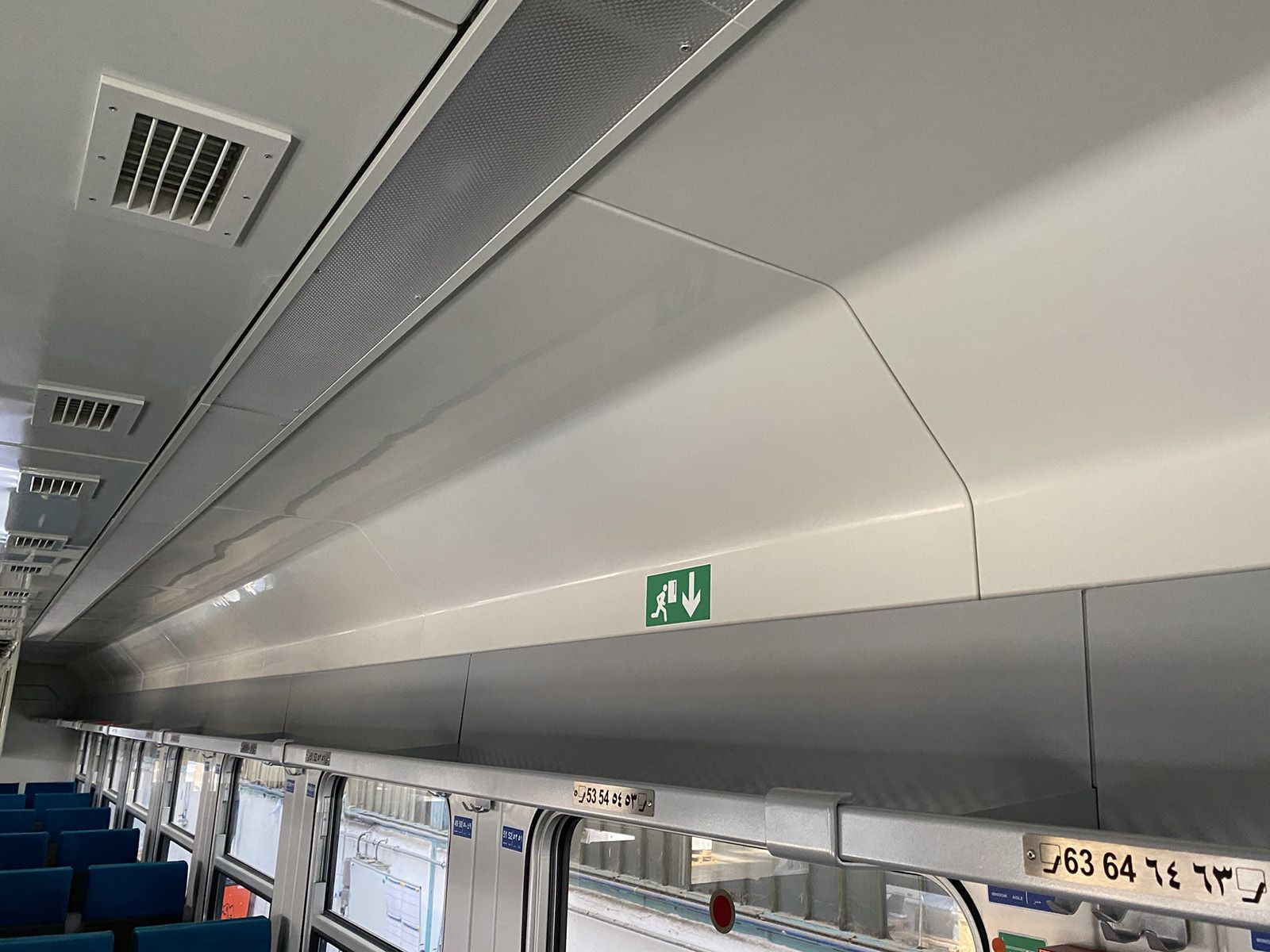
- Saloon: Windowed side wall panels and ceiling panels
- Structural elements: Partition walls and switch cabinet housings
- Service areas: Vestibule elements and lavatory components
Results
Over the past years, we have completed the largest volume project in our company’s history and established a firm foothold in the railway industry. Our production capacity enables the manufacture of 1,000 kg of composite parts per day, and our workforce has grown by 30%. This project is a perfect demonstration that Carbon Composites can deliver industrial-scale, continuous, and reliable series production for the global railway market.