

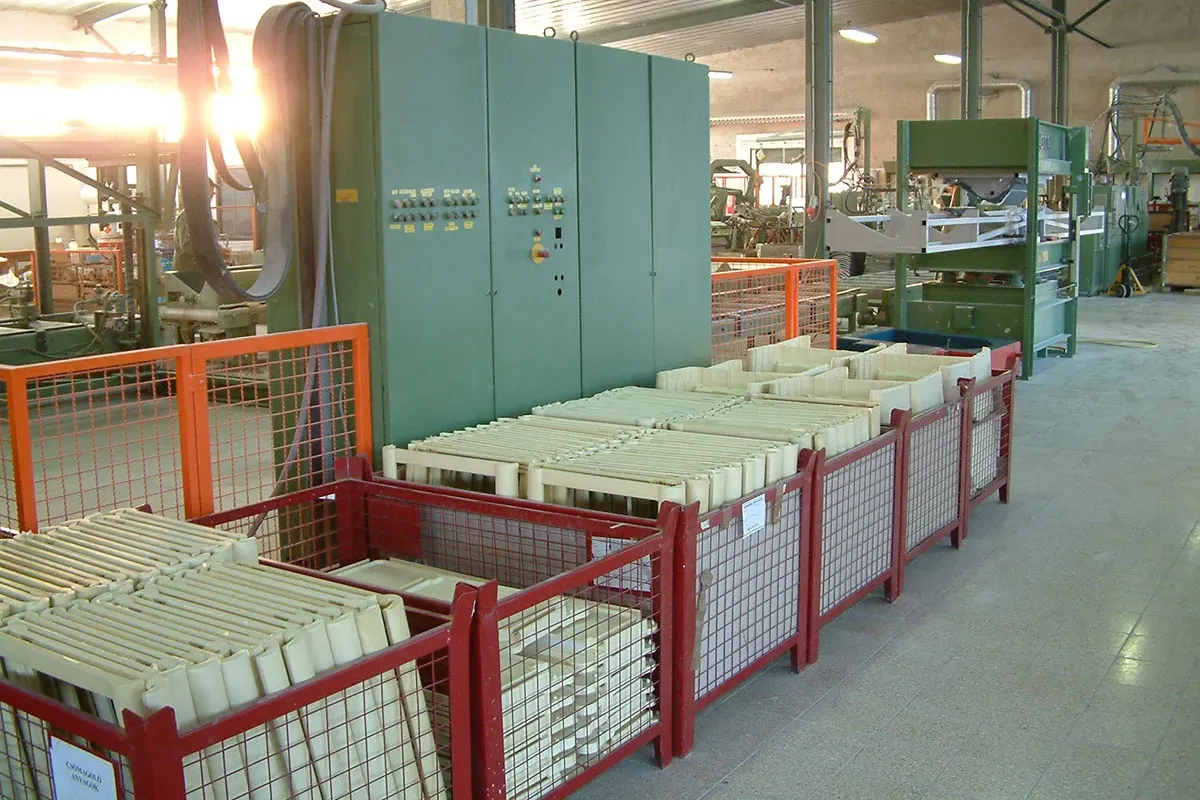
The Power of Polyurethane Technology
PUR-RIM (Polyurethane Reaction Injection Molding) is one of the most versatile and fastest-growing plastics processing technologies. Carbon Composites Ltd. has been applying this process for over two decades and has become one of Hungary’s leading PUR-RIM suppliers, particularly in the automotive and medical device sectors.
In the PUR-RIM process, two liquid components - typically isocyanate and polyol - are dynamically mixed at 200 bar pressure, then the reactive mixture is injected into a tempered mould. The two components undergo an exothermic reaction, cure and take on the shape of the mould. The result: a lightweight, tough part with excellent energy absorption, adjustable across a wide range from rigid structural elements to flexible seals.
Polyurethane materials offer an unparalleled combination of properties. Their density ranges from foam-like 100 kg/m3 to solid 1200 kg/m3. Hardness is adjustable from Shore A 20 to Shore D 80. This flexibility within a single material family enables the most diverse applications: from bumpers through interior panels to vibration-damping elements.
Our capacities
RIM Technology Fundamentals
Reaction injection moulding is fundamentally different from conventional injection moulding. While injection moulding presses pre-polymerised, melted material into the mould, in RIM the polymerisation takes place inside the mould itself. This allows lower operating pressure and temperature, meaning moulds can be simpler and cheaper - even made from aluminium.
For detailed information about the technology, PU-RIM variants (flexible/rigid/integral/RRIM), material systems, equipment design and quality control, see the PU-RIM technology guide.
Application Areas
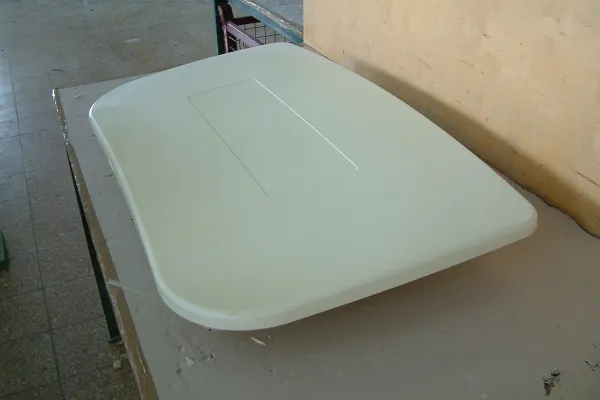
In the automotive industry, PUR-RIM technology plays a key role in producing housing elements and energy-absorbing parts. Our previous projects include spoilers and air deflectors - these aerodynamic elements were manufactured exploiting the flexibility and impact resistance of the PU-RIM process.
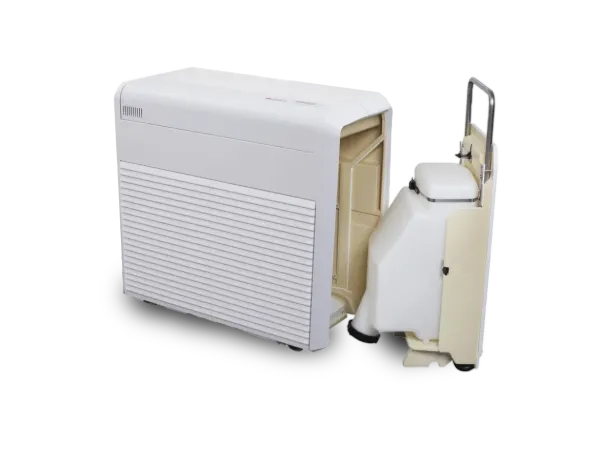
In medical technology applications, polyurethane’s biocompatibility and sterilisability open new possibilities. Examination table housings, MRI, ultrasound and X-ray equipment housings and ergonomic control surfaces are produced from this material. Agricultural and construction machinery housings also take advantage of PUR’s impact and weather resistance.
Surface Quality and Post-Processing
PUR-RIM parts exhibit excellent surface quality straight from the mould. So-called Class A surface - directly paintable to body-panel quality - is achievable with numerous formulations. By optimising the mould release system and mould surface treatment, we minimise surface defects.
Before painting, only minimal preparation is required: degreasing and sandblasting. Polyurethanes adhere well to most automotive paint systems and withstand high-temperature drying ovens.
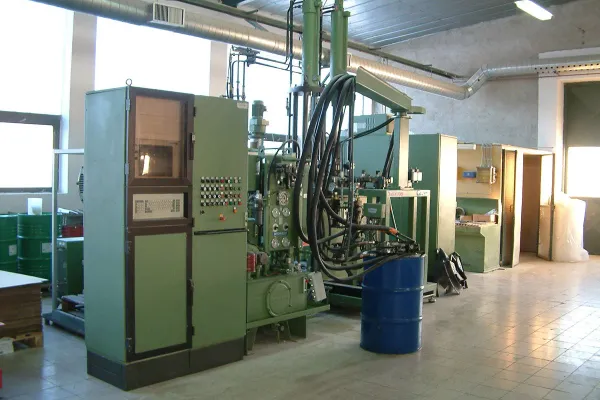
Our PU-RIM Machine Park
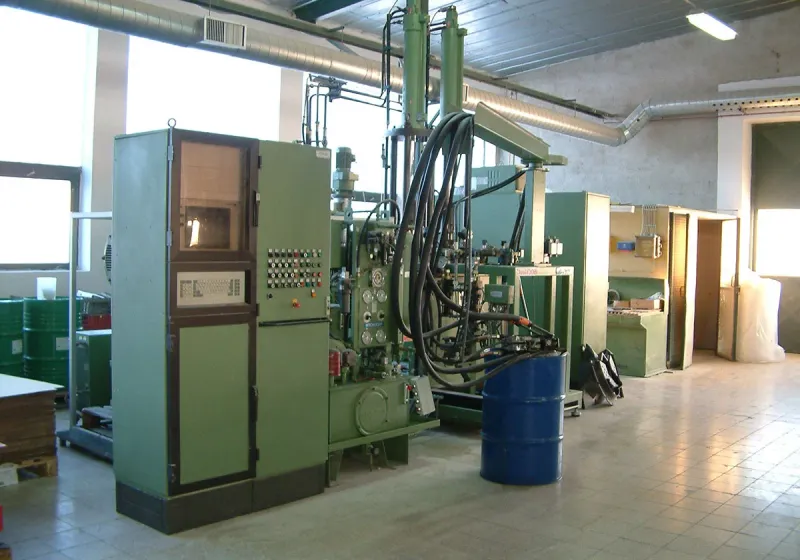
Krauss Maffei PU-RIM
Axial-pump machine operating at 150-200 bar pressure with plus/minus 1% dosing accuracy. The 10,000+ RPM mixing head blends the components in less than 1 second. Its particular strength is integral foam production: in a single step we obtain a smooth surface and a soft, cushioned core. With in-mould colouring, the part comes out of the mould ready and coloured.
- Flexible integral foams (Shore A 20-60) for seating and cushioning
- Compact systems (non-foaming) for high-strength parts
- Integral skin effect (self-skinning): smooth surface + soft core in one step
- In-mould colouring (pigment dosing into the mix)
- Fast cycle time for large series
- Precise dosing with plus/minus 1% accuracy
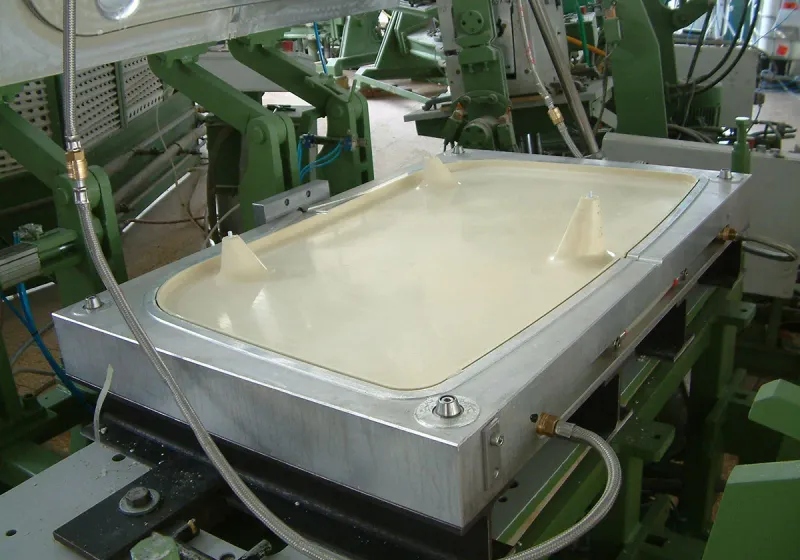
Hennecke PU-RIM
Piston-metered machine for up to 25 kg shot weight.
- High shot-weight parts (up to 25 kg)
- Rigid foams and compact systems
- Thick-walled parts (50+ mm cross-section)
- Multi-component dosing (pigment, flame retardant, additives)
- Hydraulic mould carriers (50-200 tonne clamping force)
- Handling of large moulds
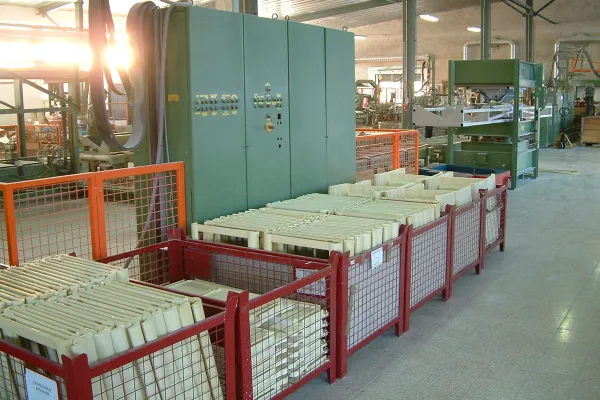
Why Carbon Composites for PU-RIM?
-
20+ years of PUR-RIM experience
We have been manufacturing polyurethane parts on Krauss Maffei and Hennecke machines since 2003. Over two decades of know-how in flexible, rigid and integral foam production.
-
In-house tooling
PU-RIM mould master models are machined from rigid foam blocks on our own Zimmermann FZ-35 CNC gantry mill, then the negative mould is built from aluminium or composite - all in-house.
-
Paint-ready surface
PU-RIM parts go directly to our paint shop for Class A surface finishing. Full vertical integration from mould to painted part.
-
Ready-to-install delivery
During assembly we integrate inserts and fasteners - the customer receives a single part number. Complete subassembly production.
-
Certifications and audits
ISO 9001:2015 quality management system, EN 45545 railway fire protection (HL2 and HL3 levels), customer-specific audits (VW, MAN, Daimler).
Featured PU-RIM Projects

Frequently asked questions about PU-RIM technology
PU-RIM (Polyurethane Reaction Injection Molding) is a reactive injection moulding process where two liquid components - isocyanate and polyol - are mixed with a high-pressure mixing head (200 bar), then the reactive mixture is injected into a closed mould. The two components undergo an exothermic reaction and cure inside the mould. The process produces parts with 2-10 minute cycle times in hardness ranging from Shore A 20 to Shore D 80.
In conventional injection moulding, pre-polymerised, melted plastic is pressed into the mould at high pressure (500-2000 bar), while in PU-RIM the polymerisation takes place inside the mould at just 2-4 bar mould pressure. This enables cheaper moulds (even aluminium), larger parts (up to 2-3 metres), and material properties adjustable across a wider range.
PU-RIM technology can produce four main material types: flexible foams (elastic seals, vibration dampers, 100-200 kg/m3), rigid foams (structural elements, thermal insulation, 200-800 kg/m3), integral skin foams (solid shell + foam core in a single shot, handles, armrests), and compact (solid) polyurethanes (body panels, Class A surface, 1000-1200 kg/m3).
Key application areas for PU-RIM technology: automotive (bumper cross-members, energy-absorbing elements, interior panels), railway vehicle manufacturing (dashboard panels, handles, seatbacks), medical technology (MRI/X-ray equipment housings, examination table housings, ergonomic control surfaces), and agricultural and construction machinery housings.
PU-RIM production is economical from 500 pieces per year. Mould costs are significantly lower than for injection moulding (aluminium moulds can be used instead of steel), making it viable even for smaller series. Carbon Composites manufactures series from 500 to several thousand pieces per year on Hennecke and Krauss Maffei machines.
Yes, PU-RIM parts can exhibit excellent so-called Class A surface quality straight from the mould, directly paintable to body-panel standard. Before painting, only minimal preparation is needed (degreasing, sandblasting), and polyurethanes adhere excellently to automotive paint systems.
PU-RIM operates at lower mould pressure (2-4 bar vs. 500-2000 bar), so cheaper aluminium moulds can be used. Larger parts can be manufactured (up to 2-3 metres), and material properties are adjustable across a wider range (Shore A 20 to Shore D 80).