

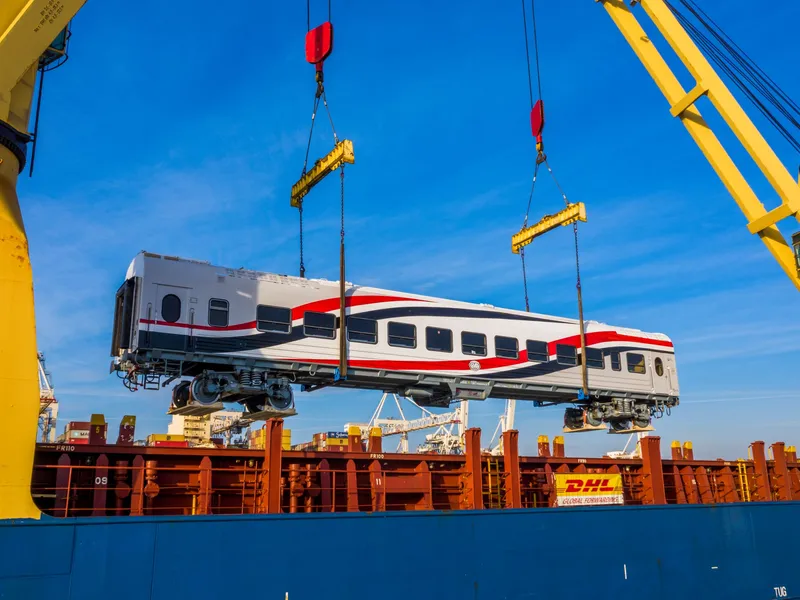
Railway composite panels are used where passenger safety, durability and stable fit are critical. Carbon Composites supports railway programs with interior and exterior parts that are engineered for demanding service environments and repeatable industrial production.
Why composites are used in railway interiors
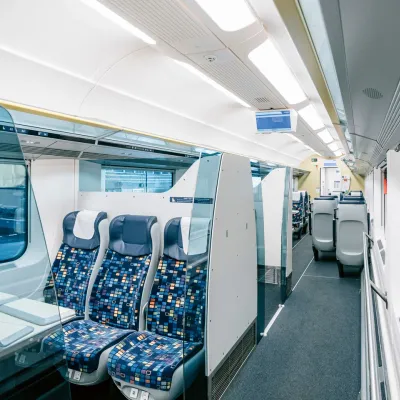
Passenger rail interiors must combine low weight, long service life and strict fire-performance requirements. Composite systems make it possible to create large, shaped interior surfaces with consistent geometry while keeping weight under control and supporting modular assembly.
This is particularly important for sidewalls, window surrounds, seat-related elements and partition systems. These parts must withstand intensive daily use, cleaning cycles and mechanical impacts while still maintaining visual quality and dimensional stability across a full fleet.
Project experience and production approach
Our railway work includes programs linked to passenger-interior modernization and large transport projects where the quantity, fit accuracy and documentation requirements are all significant. In these applications, tooling quality and CNC-controlled trimming are just as important as the composite layup itself.
For higher-volume projects, RTM offers strong repeatability and efficient cycle times. It also helps maintain controlled resin content and consistent surfaces, which is essential when components must match across many rail vehicles.
Quality and cooperation
Rail projects begin with specification review, material selection and tooling planning. From there, we support prototype validation and industrialization, including documentation and manufacturing control expected in transport-sector programs. The result is a railway composite solution that balances safety, durability and production efficiency.