
A New Era in Lake Balaton Navigation
Bahart (Balatoni Hajózási Zrt.) renewed its fleet in 2022-2023: two modern catamarans and two state-of-the-art ferries were built for Lake Balaton. Carbon Composites Ltd. served as the project’s composite supplier, manufacturing the vessels’ panel elements and structural components for the SAM Shipbuilding (Komárno, Slovakia) shipyard.
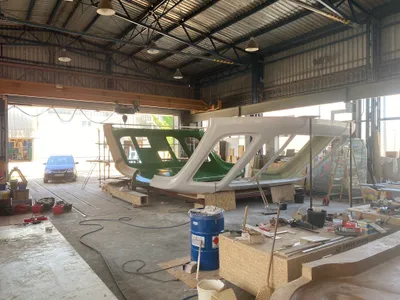
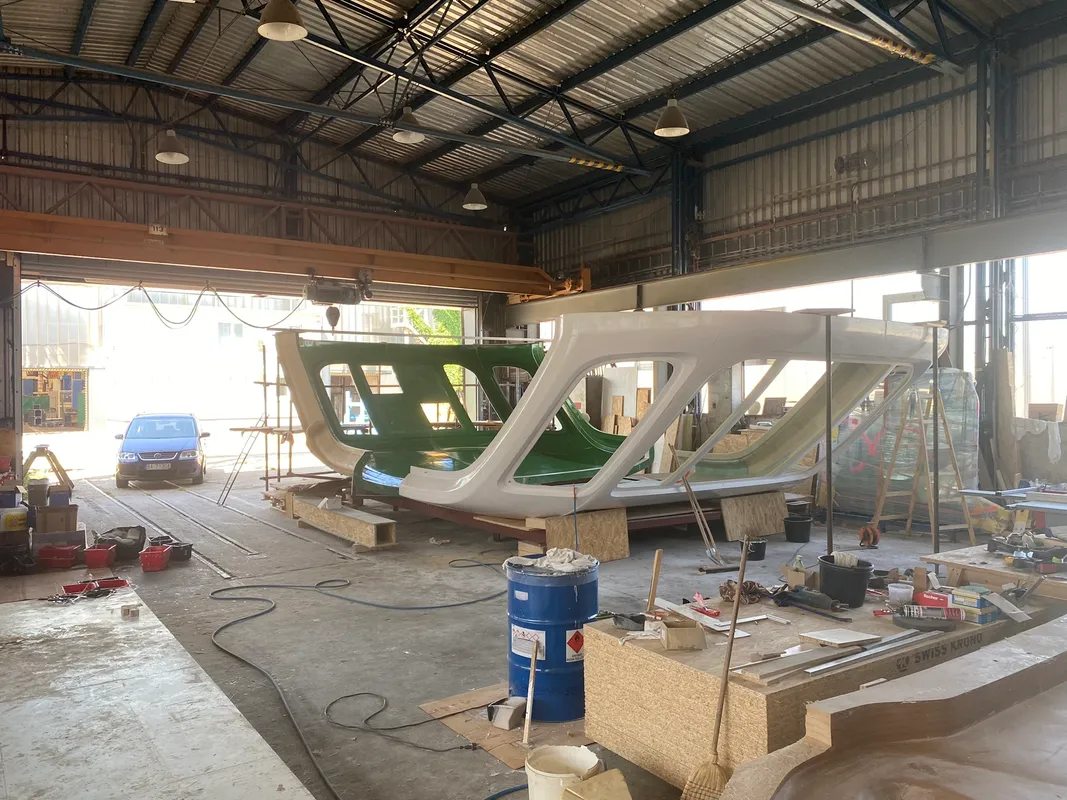
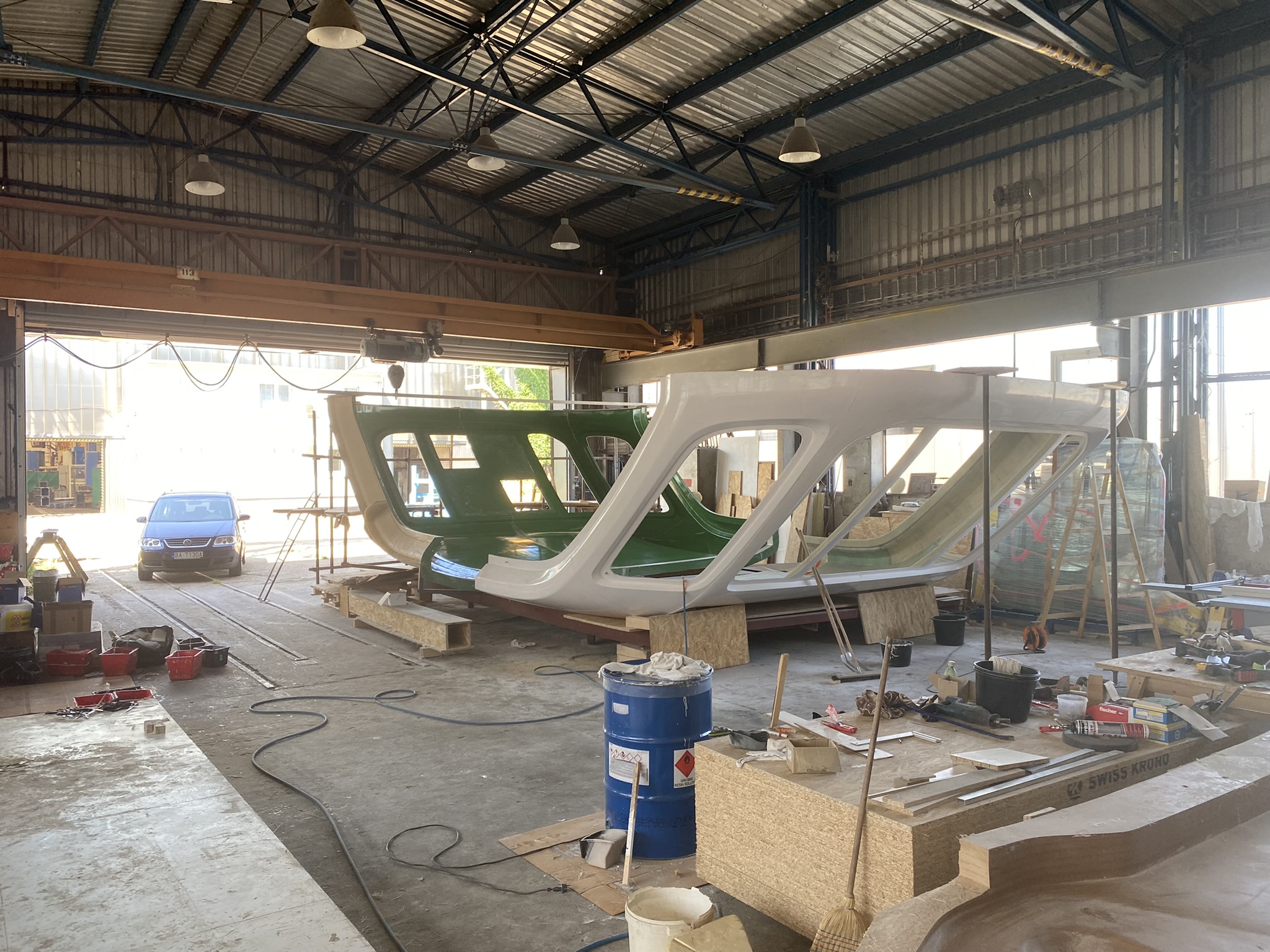
The project was realised based on designs by Werkemotion design studio (Slovakia/Czech Republic), with engineering by MULTI Engineering. The vessels entered service on Lake Balaton in 2023, significantly increasing capacity and travel comfort.
Carbon Composites’ Role in the Project
Composite Panel Manufacture
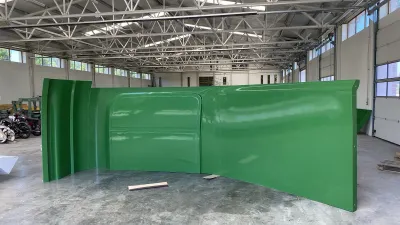
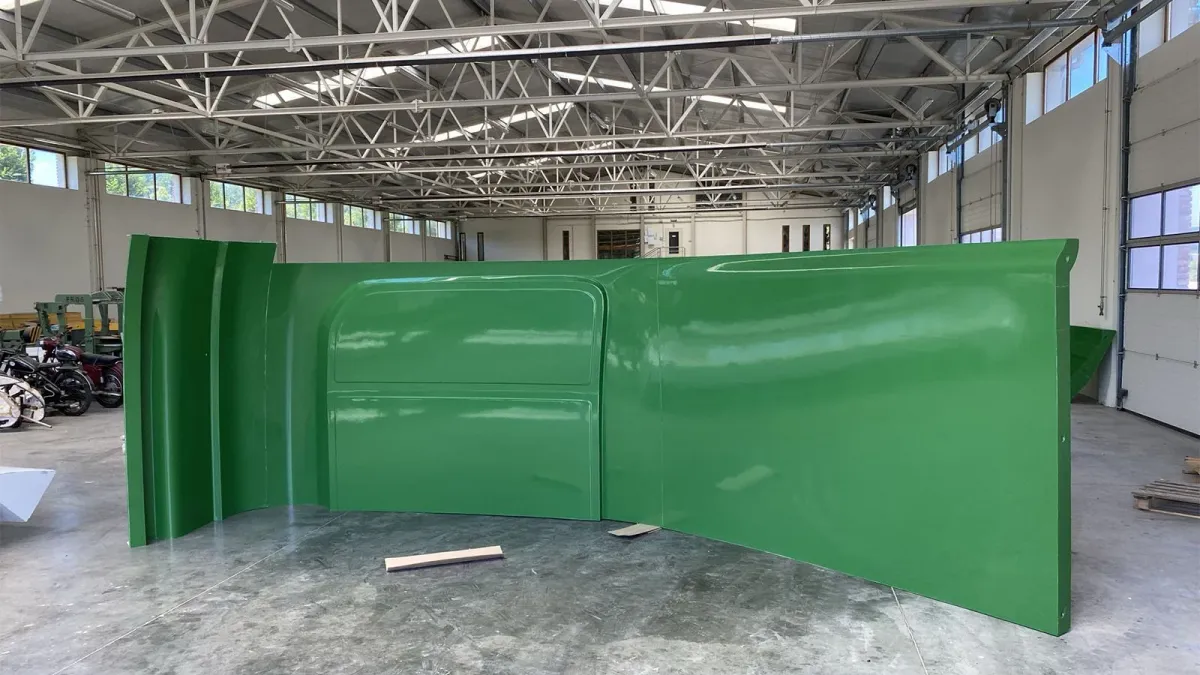
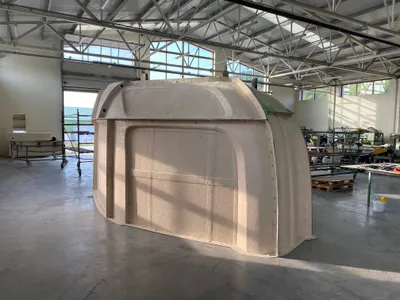
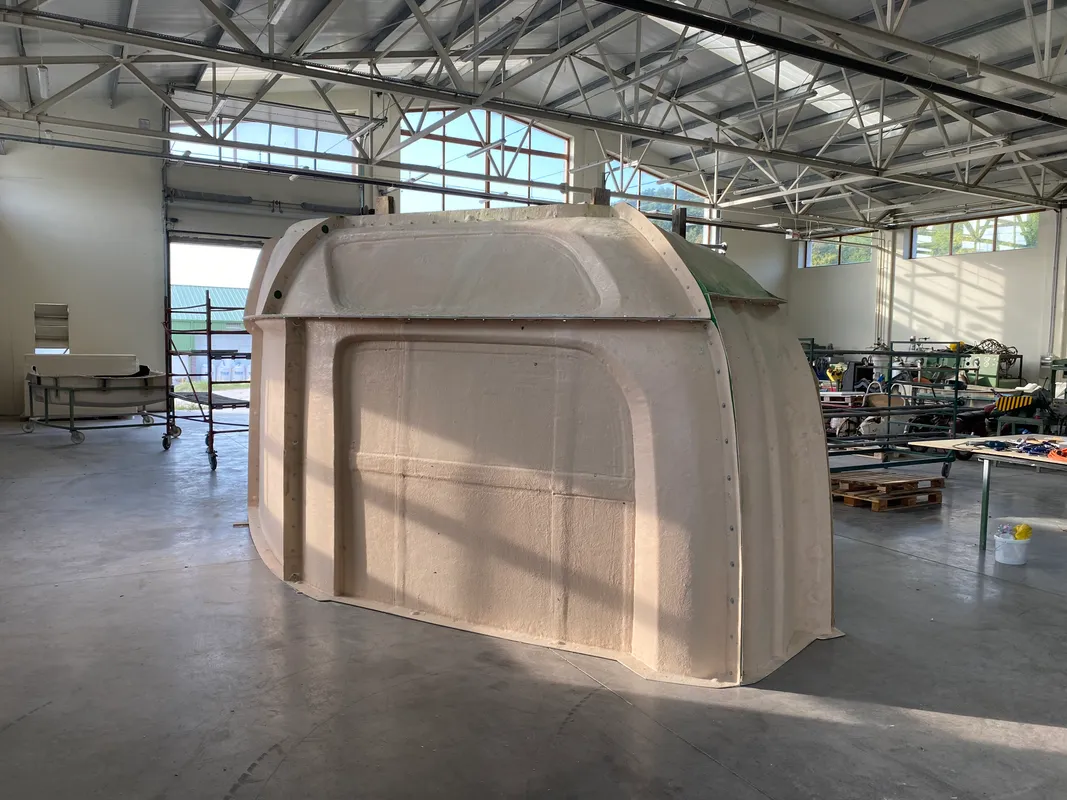
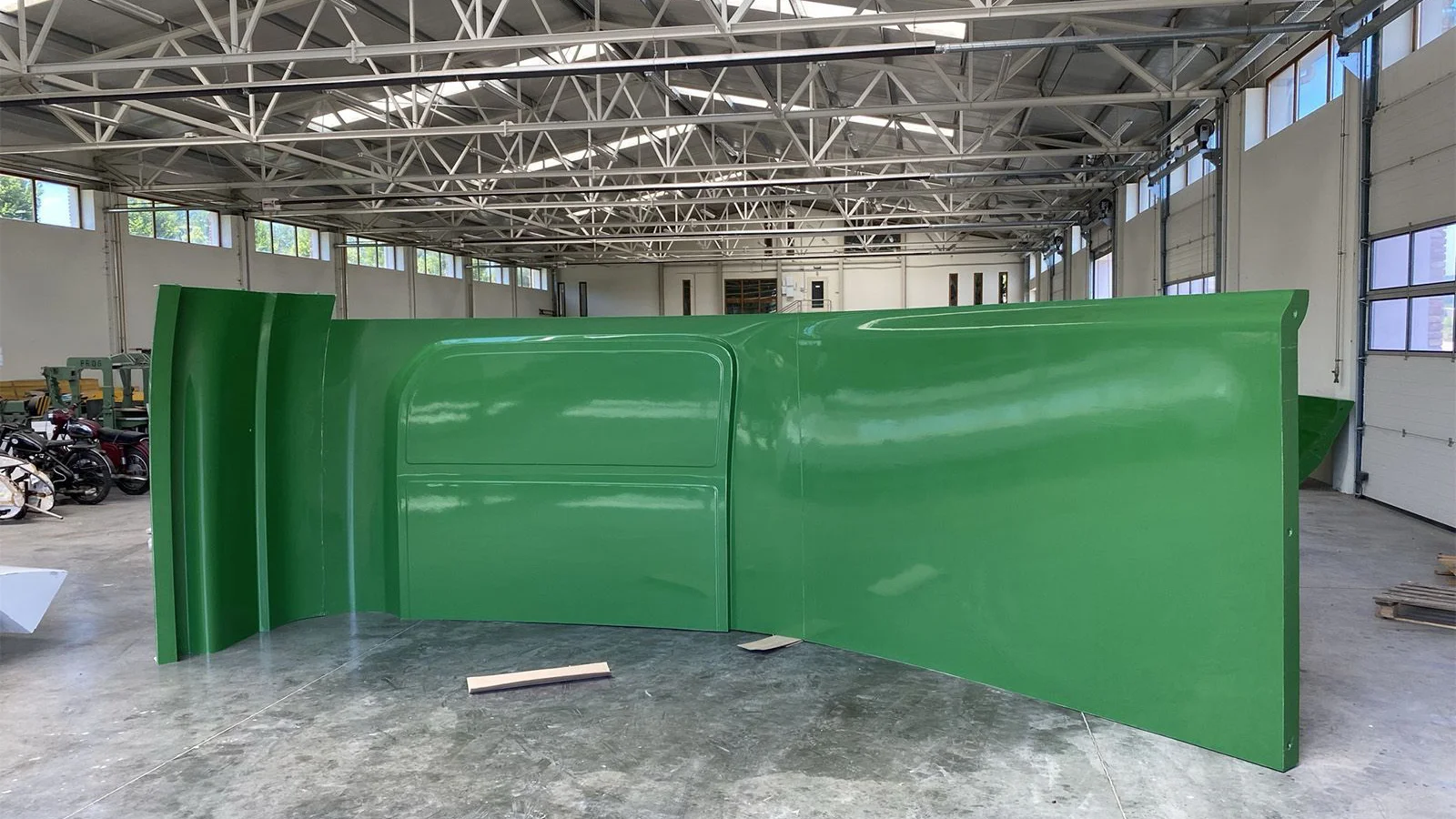
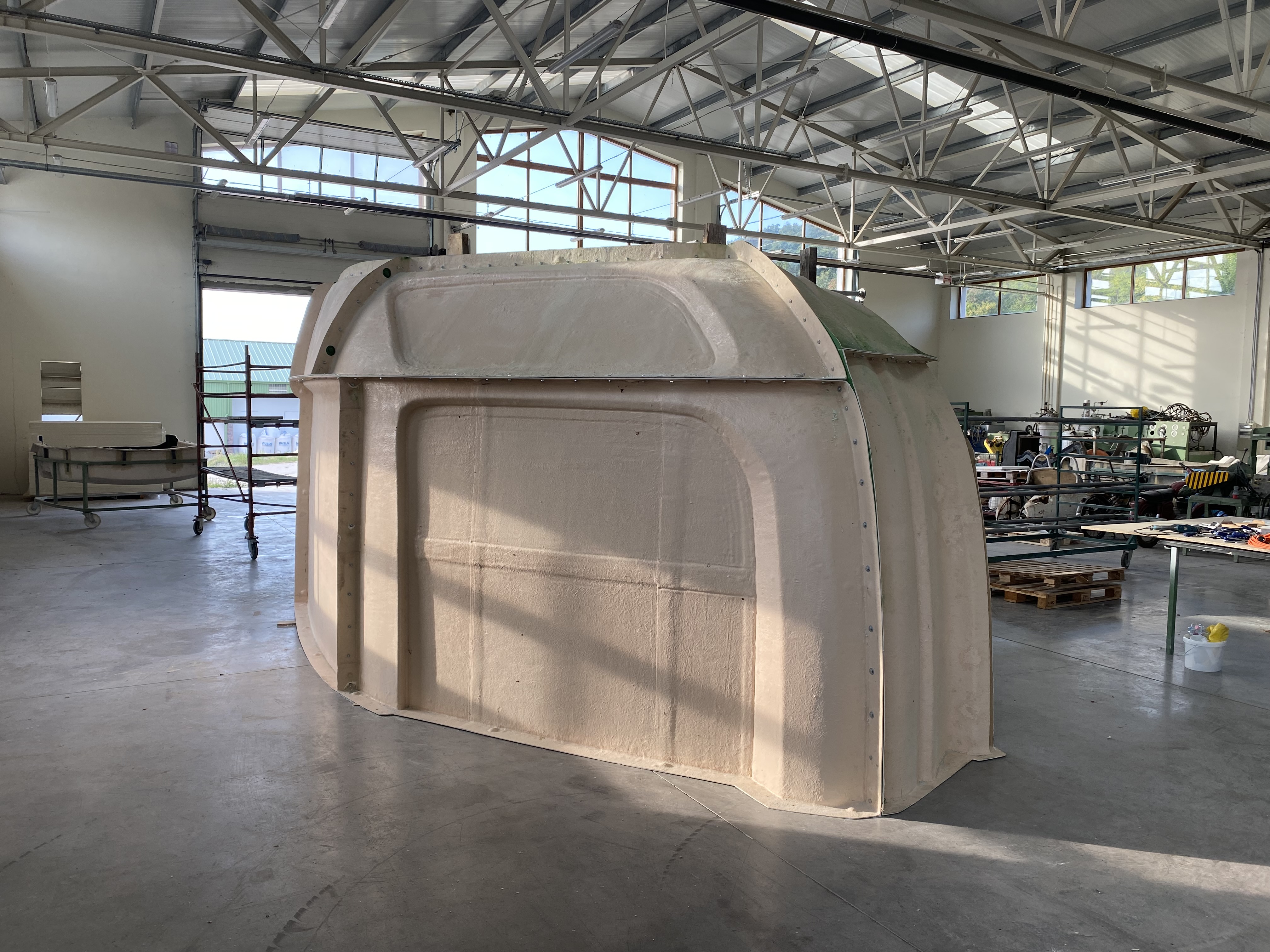
Carbon Composites Ltd. was responsible for manufacturing the vessels’ exterior and interior composite panel elements. Glass-fibre composite (GRP) technology enables the production of lightweight, durable and corrosion-resistant structures ideal for marine applications.
Manufactured elements:
- Exterior cladding panels
- Interior structural elements
- Deck panels
- Wheelhouse composite components
RTM Technology in Shipbuilding
The larger structural elements were produced using RTM (Resin Transfer Molding) technology. This process ensures:
- Smooth surfaces on both sides – no post-finishing required
- Uniform wall thickness – consistent mechanical properties
- Reproducible quality – ideal for series production
- Complex geometries – curved surfaces and ribbing in a single step
Tooling & Master-Modell Production
In the first phase of the project we CNC-machined the master models and manufactured the production tools. Our Zimmermann FZ-35 gantry mill’s 3.5 m working area enabled precision machining of the tooling for large-format vessel elements.
Tooling process:
- CAD model handover from designer (Werkemotion)
- Master-modell CNC machining from model board
- Composite tool lamination from the master modell
- Tool surface treatment and tempering
- Trial production and quality inspection
Marine Composite Requirements
Challenges of the Marine Environment
Composite components used in shipbuilding must meet special requirements:
Environmental resistance:
- UV resistance – continuous sun exposure
- Water resistance – constant moisture, submerged sections
- Temperature fluctuation – -20 °C in winter, +40 °C in summer
- Mechanical stress – waves, docking impacts
Quality requirements:
- Gelcoat surface with UV stabiliser
- Osmosis protection (underwater sections)
- Fire-retardant resin systems (passenger areas)
- Long-lasting colour stability
Lightweight Benefits
Composite technology offers significant advantages over traditional steel or aluminium shipbuilding:
Weight reduction:
- 30-40% lighter than steel
- Lower fuel consumption
- Greater payload capacity
Maintenance:
- Does not corrode
- No painting required (gelcoat surface)
- Long service life with minimal maintenance
Design freedom:
- Complex, streamlined shapes
- Hydrodynamically optimised hull
- Custom design realisation
International Collaboration
SAM Shipbuilding Partnership
SAM Shipbuilding and Machinery (Komárno, Slovakia) is one of Central Europe’s leading shipyards. The collaboration between Carbon Composites Ltd. and SAM during the Bahart project demonstrated that Hungarian composite expertise and Slovak shipbuilding experience complement each other excellently.
Project coordination:
- Design: Werkemotion (CZ/SK) + MULTI Engineering
- Shipbuilding: SAM Shipbuilding (Komárno, SK)
- Composite elements: Carbon Composites (Balatonszőlős, HU)
- Client: Bahart (Balatoni Hajózási Zrt., HU)
Delivery & Logistics
The finished vessels reached Lake Balaton via the Danube and the Siófok canal. During the special transport the vessels had to be partially disassembled to pass under low bridges – a factor already considered in the design phase.
Technical Data
Catamaran Specifications
Capacity:
- Main deck: 200 seats
- Sun deck: 80 seats
- Bar and catering unit
- Premium wheelhouse
Propulsion:
- EUR Stage 5 engines
- Reduced emissions
- Fuel-efficient
Dimensions:
- Length: ~30 metres
- Beam: ~8 metres (catamaran)
- Passenger capacity: 280 persons
Environmental Sustainability
The new vessels are significantly more environmentally friendly than their predecessors:
- 50% lower fuel consumption – modern engines + lightweight composite structure
- Lower emissions – EUR Stage 5 standard
- Reduced noise – passenger comfort and environmental protection
- Long service life – durable composite materials, minimal maintenance
Results & Outlook
Successful Commissioning
The vessels commissioned in 2023 have since carried more than 100,000 passengers on Lake Balaton. Passenger feedback is excellent: the modern design, spacious interiors and comfortable seating have elevated the Balaton navigation experience to a new level.
Project results:
- 4 vessels successfully delivered
- On time and within budget
- Excellent quality indicators
- Positive passenger feedback
Shipbuilding Reference
The Bahart project proves that Carbon Composites Ltd. is capable of performing as a composite supplier on large-volume, complex marine projects. The special requirements of watercraft – UV resistance, water resistance, mechanical loading – were all met.
This reference opens the way to further shipbuilding projects: composite elements for ferries, catamarans, small craft and special watercraft.
Related Projects
Marine composite manufacture presents similar technological challenges to other sectors:
- Railway – similarly sized panels, fire-resistance requirements
- Aviation – lightweight solutions, strict quality standards
- Automotive – series production, surface quality, durability
Carbon Composites Ltd.’s more than 30 years of composite manufacturing experience enables us to serve the specialised needs of diverse industries – from shipbuilding to railway vehicles, from medical devices to the automotive sector.